Use this guide to choosing a historic dining venue to find welcoming character, excellent food and flexible spaces for meals and celebrations near home.
A memorable meal is rarely just about what arrives on the plate. The right room, the welcome at the door, the stories held in the walls and the ease of settling in all play their part. This guide to choosing a historic dining venue will help you look beyond old beams and period features, so you can find somewhere that feels genuinely special while still delivering the food, service and comfort you expect.
Start with history that feels lived in
A historic venue should have character, not simply a collection of antiques. Look for a place where the building’s past adds to the experience: original features, a sense of place and an atmosphere that feels warm rather than staged. A country pub that has welcomed local people for generations often has a natural ease about it, whether you are dropping in for a drink, bringing the children for lunch or gathering friends for dinner.
History can mean different things to different diners. Some people love low ceilings, open fires and traditional corners made for a quiet pint. Others want the charm of an old building with a lighter, more polished restaurant setting. Neither is better, but it is worth deciding what suits your occasion. A birthday meal may call for a table with a little ceremony, while a Sunday lunch with family needs space to relax and room for everyone to feel at home.
Pay attention to how the venue balances heritage with care. A beautiful old building should not mean uncomfortable seating, chilly dining rooms or facilities that feel overlooked. The best historic restaurants preserve their personality while making modern guests feel properly looked after.
Choose a historic dining venue for the occasion
The occasion should guide your choice from the start. A venue that is perfect for a relaxed midweek supper may not be the best fit for a larger anniversary gathering, and a busy family pub may not provide the quiet corner a couple wants for a long lunch.
For a casual meal, look for an approachable menu, easy booking options and a drinks range that makes it tempting to stay for another round. For family dining, consider children’s choices, high chairs, practical access and outdoor space where little ones can let off steam. If the dog is coming too, check whether outside areas are dog-friendly and whether there is shelter if the weather turns.
Celebrations need a little more thought. Ask whether the venue can seat your group comfortably, handle dietary requirements and give your party enough space without making it feel separate from the atmosphere of the pub. Private hire can be ideal for milestone birthdays, wakes, engagement parties and family reunions, but a dedicated area within the main venue can be a better choice if you want the buzz of a lively service around you.
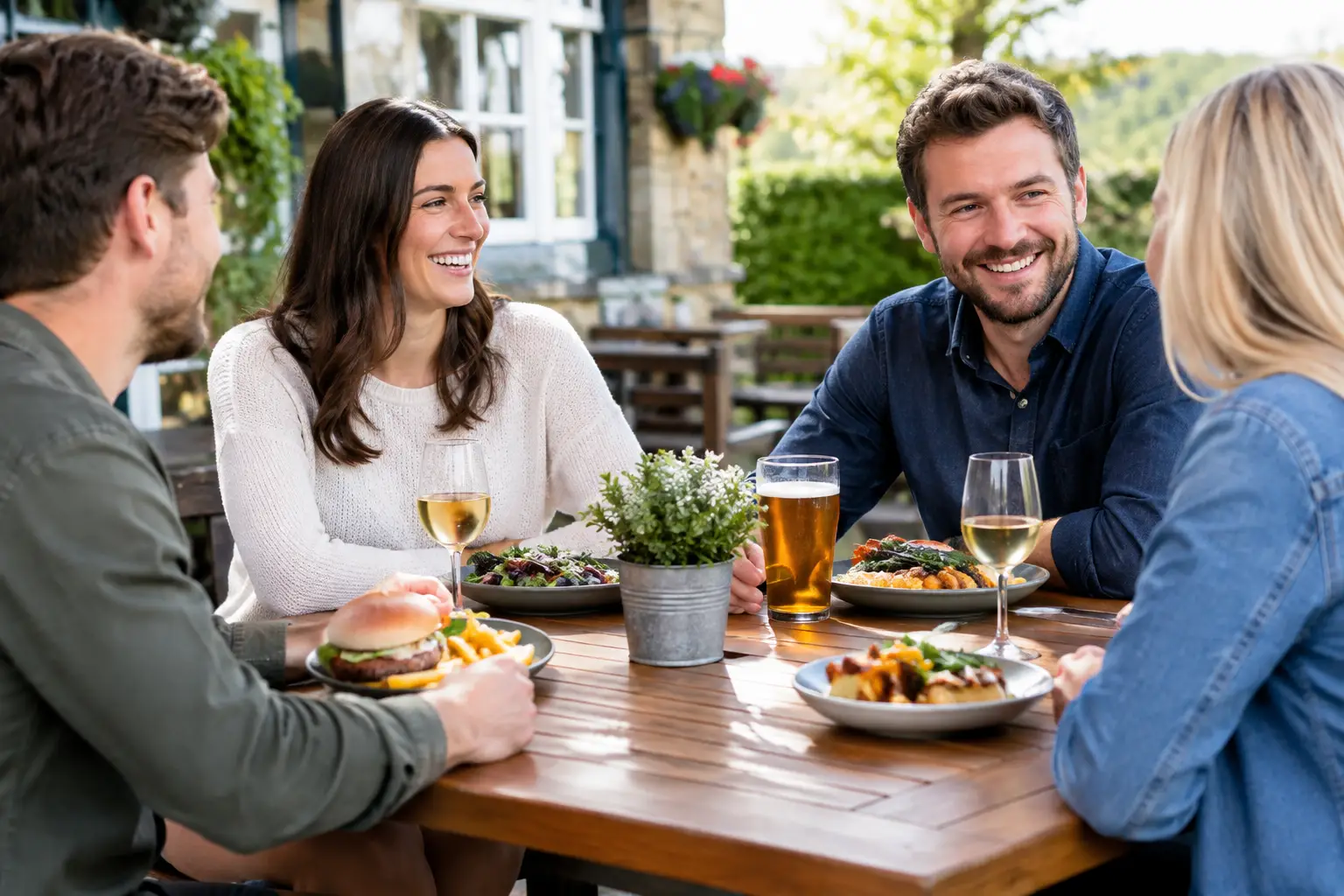
The setting matters too. A beer garden can transform a summer gathering, while a heated outdoor dining space gives an occasion its own sense of theatre when the evenings are cooler. Think about the season, the ages of your guests and how long you plan to stay.
Look beyond the building to the food
Historic surroundings may get people through the door, but the kitchen gives them a reason to return. Before booking, get a clear sense of the food on offer. A strong historic dining venue should be confident in its menu, whether it serves classic pub favourites, seasonal dishes or restaurant-style cooking built on traditional techniques.
The most appealing menus usually strike a balance. You may want the comfort of a beautifully cooked roast, fish and chips or a proper pie, alongside a few dishes that feel more considered for a special meal out. This is particularly useful when your party has mixed tastes. One guest may be after a familiar classic, while another wants something more adventurous.
Freshness and consistency matter more than an overly long menu. A concise selection prepared with care often says more about a kitchen than pages of choices. Look for seasonal ingredients where appropriate, clear vegetarian options and staff who can confidently explain dishes and allergens.
Drinks deserve the same attention. In a historic pub, a well-kept real ale may be part of the appeal, but a good experience should not stop there. Wine, cocktails, soft drinks and fresh coffee all matter when a table includes different generations, designated drivers or guests staying for dessert. A broad, thoughtful drinks offering lets everyone choose their own version of a good afternoon or evening.
Ask whether the menu works for your whole table
It is easy to choose a venue based on what you would order, then discover it is a poor fit for someone else in the group. If you are booking for several people, consider dietary needs before you reserve. Ask about gluten-free choices, vegan dishes and how the kitchen handles allergies. For children, a menu with sensible portions and familiar options can make the difference between a relaxed lunch and a rushed one.
There is a trade-off here. A highly specialised restaurant can be excellent for a food-focused occasion, but it may not suit a varied family group. A historic pub and restaurant with a wider offering is often the more flexible choice when you want everyone to leave happy.
Judge the welcome, not just the décor
A historic venue should feel inviting from the moment you arrive. Notice whether the team acknowledges you quickly, whether tables are well laid and whether the room feels cared for. Hospitality is often found in the small details: a thoughtful recommendation, a prompt drink, a warm response to a child’s question or the simple feeling that nobody is trying to hurry you out of the door.
Online comments can offer a useful picture, especially when the same themes appear repeatedly. Praise for friendly staff, generous food, a welcoming garden or well-run celebrations is usually more revealing than one glowing review. Equally, look at how a venue responds when things do not go perfectly. A good local business takes feedback seriously and works to put things right.
If you can, visit for a drink before making a large booking. You will get a feel for the pace of service, the noise level and the type of crowd it attracts. This is especially worthwhile for weddings, private events and larger family meals, where the right atmosphere is just as valuable as the right menu.
Check the practical details before you book
Character is wonderful, but practicalities protect the enjoyment of the day. Check opening times, parking, access and the likely journey home before inviting guests. Country venues can offer peaceful surroundings and generous outdoor space, although they may be less convenient for anyone relying on public transport or travelling from different directions.
For a group, ask how deposits, pre-orders and cancellations work. These policies are not a nuisance when they are clearly explained - they help the kitchen and front-of-house team prepare properly for your party. If you are arranging a celebration, confirm the table layout, timing, decorations, cake arrangements and whether a private space is available.
It is also sensible to ask what happens if the weather changes, particularly if you are hoping to eat outside. A good venue will have a comfortable alternative rather than leaving guests squeezed into an unsuitable corner. The same applies to accessibility. Historic buildings can have quirks, so speak to the team in advance if any guest has mobility needs, uses a wheelchair or requires step-free access.
Find a place you will want to return to
The best historic dining venues are not saved only for landmark occasions. They are the places you remember for a spontaneous lunch, a catch-up over coffee, a proper Sunday roast and a dinner that feels more special than cooking at home. Their heritage gives the visit a sense of occasion, but their consistency makes them part of local life.
At The Merry Fiddlers, that balance is at the heart of the experience: a long-established country pub setting, quality food, a generous drinks selection and spaces suited to everyday meals as well as celebrations. The right venue should let you eat delicious food, grab a drink and, most of all, relax.
When you find somewhere with real character, thoughtful cooking and a welcome that includes every guest at the table, make the booking. The building may have stood for centuries, but the best reason to visit is always the time you create there now.