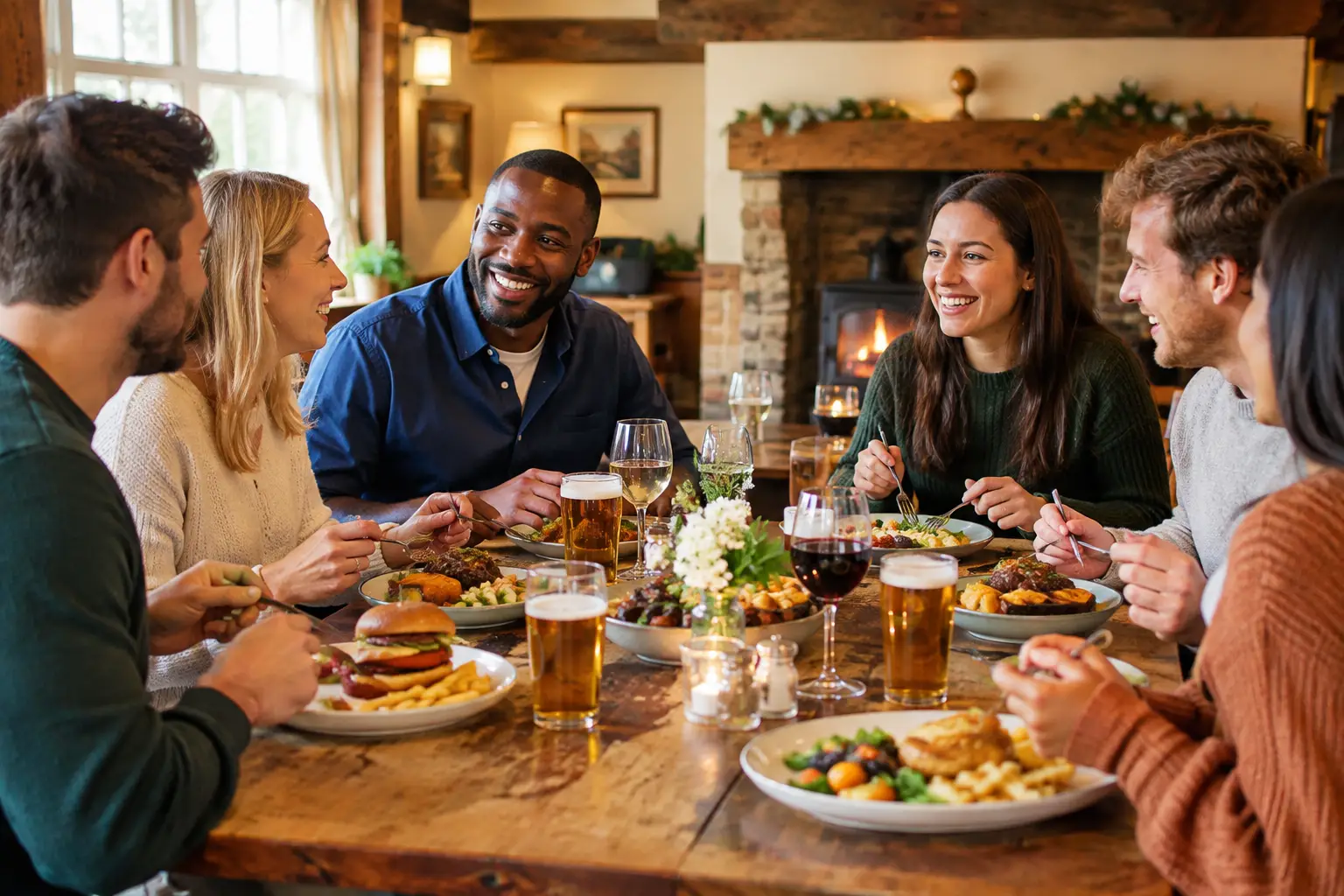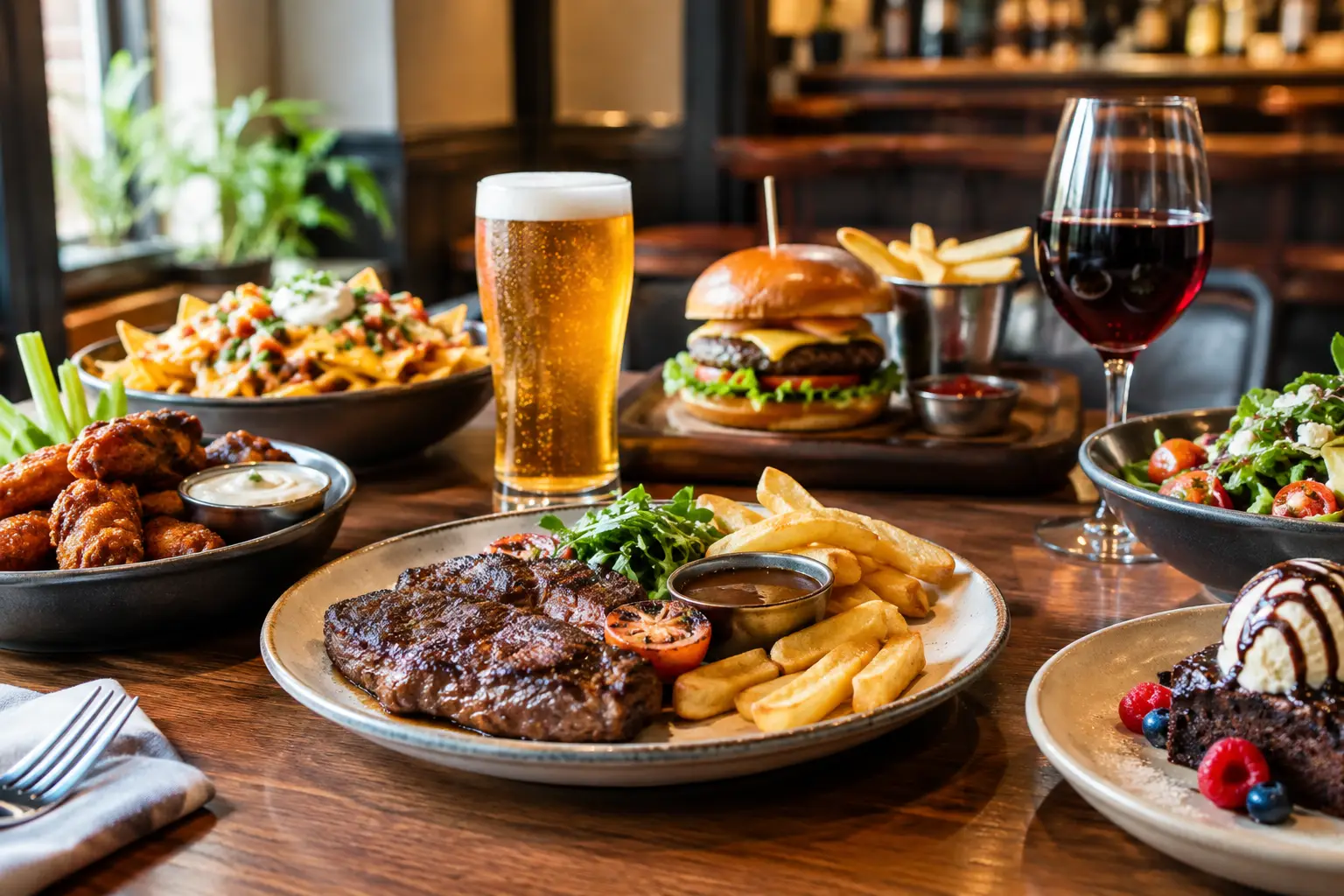
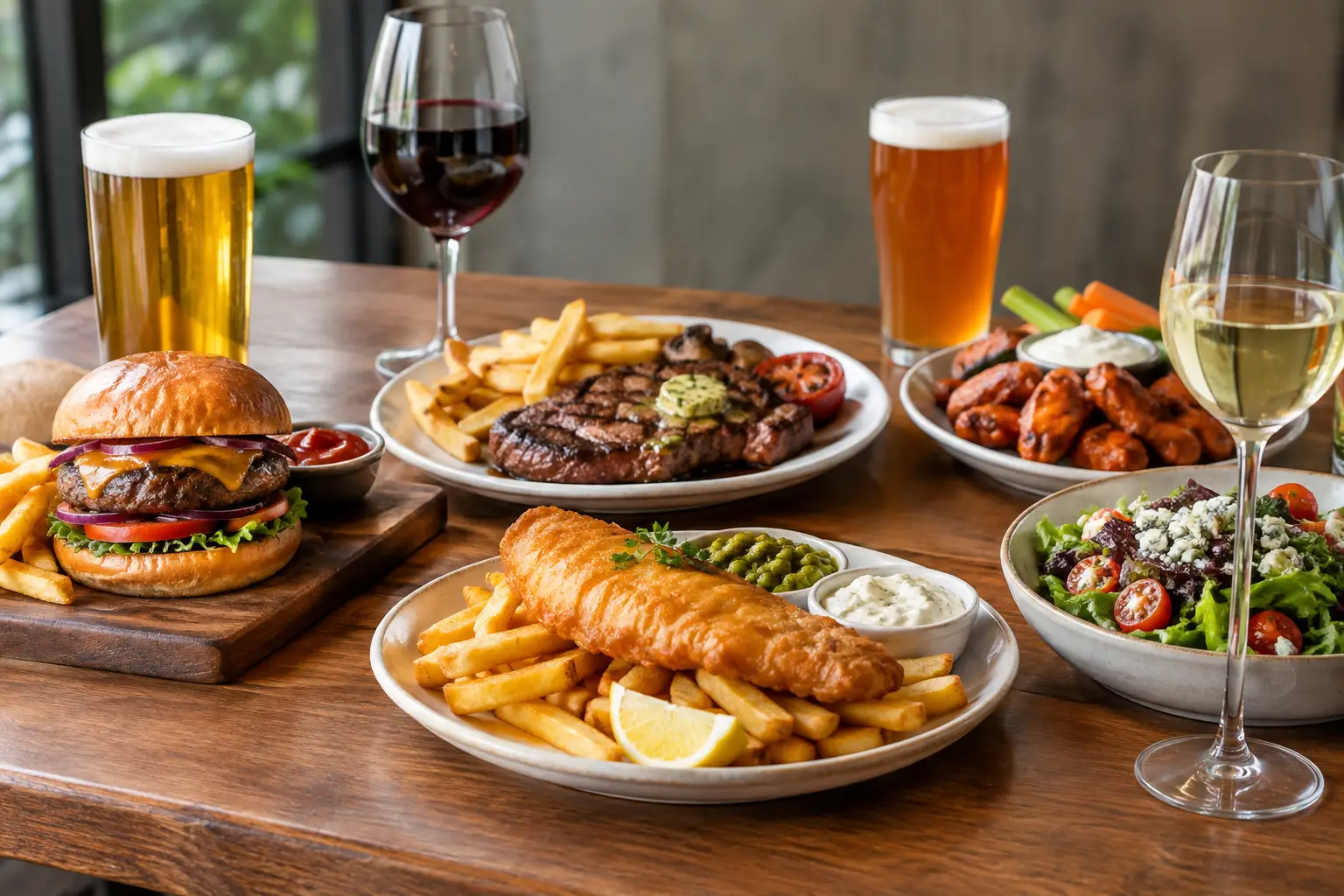
From a crisp pint with fish and chips to a bright cocktail beside a Sunday roast, find the best drinks to pair with pub meals for every occasion today.
A proper pub meal deserves more than the nearest drink on the bar. The best drinks to pair with pub meals bring out the best in the plate, whether that means cutting through the richness of a Sunday roast, matching the smoky depth of a burger or keeping a leisurely lunch refreshingly light. There is no need for rules that take the fun out of ordering, but a little thought can turn an already good meal into something memorable.
At a country pub, the occasion matters too. A pint after a walk, a glass of wine over a long lunch, a celebratory cocktail or a great alcohol-free option all have their place. The key is choosing a drink that suits both your food and the way you want to spend the afternoon or evening.
Best drinks to pair with pub meals: start with balance
The simplest way to choose is to think about weight, richness and flavour. Lighter dishes tend to sit well with crisp, refreshing drinks. Richer plates often benefit from acidity, gentle bitterness or bubbles to clear the palate between mouthfuls. If your dish has spice, sweetness or plenty of smoke, look for a drink that either cools those flavours or meets them with enough character of its own.
That does not mean every pairing needs to be serious. If your favourite order is a hearty pie with a familiar real ale, that is a fine place to start. Good pairing is about making the food taste even better, not following a formula. Ask what you fancy, then use the menu as a helpful guide.
Fish, seafood and lighter plates
Fish and chips calls for something clean and lively. A dry lager is a classic choice: its carbonation freshens the palate after crisp batter and chips, while its light malt flavour does not overpower the fish. A session pale ale can work beautifully too, especially where the dish includes lemon, tartare sauce or a punchy pea purée.
For grilled fish, prawns or a fresh salad, a chilled Sauvignon Blanc offers brightness and herbal notes that suit citrus, herbs and lighter sauces. Pinot Grigio is another easy-going option, particularly when you are after a relaxed glass rather than something too aromatic. If the dish is richer, perhaps with a creamy sauce, a softly oaked Chardonnay can add enough body without losing freshness.
A gin and tonic is also a pleasing companion for seafood, particularly on a warm day in the garden. Keep the garnish simple so it does not fight the food. Citrus works well; an overly sweet mixer usually does not.
Burgers, steaks and dishes from the grill
Burgers and grilled meats have bolder flavours, so they can handle a drink with more malt, fruit or structure. A well-kept amber ale or bitter is a natural partner for a beef burger, particularly one with mature cheese, bacon or caramelised onions. The slight bitterness balances the richness, while the malt brings out the savoury, toasted notes from the grill.
If you prefer wine, a juicy Malbec, Shiraz or Cabernet Sauvignon is a dependable choice with steak. These reds have the body to stand up to charred edges and peppery sauces, but they are not all the same. Malbec is often softer and fruitier, while a Cabernet can feel firmer and more structured. For a lighter grilled chicken dish, Pinot Noir offers a more delicate red option with enough freshness to keep the meal from feeling heavy.
Cocktails can earn their place here as well. An Old Fashioned has enough depth for a steak, while a classic Negroni suits salty, smoky bar snacks and charcuterie. These are confident drinks, though, so they are best when you want to linger rather than race through a quick midweek supper.
Pies, sausages and comforting pub classics
A golden pie, bangers and mash or a slow-cooked braise calls for comfort in the glass too. This is where real ale shines. A traditional bitter has biscuit-like malt character and gentle hops that sit neatly beside gravy, pastry and root vegetables. For a beef and ale pie or a rich game dish, a fuller ruby ale may match the deeper, savoury flavours particularly well.
Red wine remains a strong alternative. A Merlot is rounded and approachable with dishes that have a silky sauce, while a Côtes du Rhône-style blend brings spice and warmth to sausages, lamb and slow-cooked meats. Avoid serving reds too warm. Slightly cool is often more refreshing and makes the fruit clearer alongside a hearty plate.
For anyone avoiding alcohol, a proper ginger beer can be a terrific match with rich food. Its spice and fizz provide the lift you might otherwise get from beer, especially with sausages, pork or dishes with a sweet glaze.
Sunday roasts need freshness as well as depth
A Sunday roast can seem like an obvious red wine occasion, and often it is. Roast beef pairs happily with a medium-bodied red such as Malbec or Cabernet Sauvignon, while lamb is excellent with a peppery Syrah or a fruit-led Rioja. The savoury depth of the meat, Yorkshire puddings and gravy needs a drink with enough presence to keep pace.
But white wine should not be overlooked. Roast chicken with herbs, creamy cauliflower cheese and spring vegetables can be lovely with Chardonnay, particularly one that has some texture but remains fresh. With pork, apple sauce and crackling, an off-dry cider is hard to beat. Its apple character echoes the sauce, while the acidity cuts through the richness of the crackling.
A good pale ale is the pub-minded answer for almost any roast. It brings a little fruit, a little bitterness and enough refreshment to carry you from the first roast potato to the last spoonful of gravy. If your table has ordered different meats, it is often the most flexible choice.
Spicy dishes, sharing plates and lighter bites
Spice changes the pairing conversation. Higher alcohol and heavy tannins can make chilli feel fiercer, so a cold lager, a lightly sweet cider or an aromatic white wine is usually a better fit. Riesling, where available, is particularly good with heat because its fruit and acidity soften spice without covering up the food.
For sharing plates, the right drink depends on what lands in the middle of the table. A dry sparkling wine is wonderfully adaptable with fried bites, salty nibbles and creamy dips. Its bubbles lift the palate and make every next mouthful feel as good as the first. It also brings a little occasion to a catch-up with friends without feeling overly formal.
If you are choosing a cocktail, look for bright flavours rather than syrupy sweetness. A mojito-style drink, a paloma or a spritz can work well with lighter plates, grilled chicken and summery starters. With food, balance matters more than theatrics.
Do not overlook alcohol-free drinks
A thoughtful alcohol-free choice should feel like part of the meal, not an afterthought. Alcohol-free beer has come a long way and gives you the familiar crispness that works with fish and chips, burgers and salty snacks. Sparkling water with plenty of ice and a wedge of citrus is simple, refreshing and particularly useful with rich dishes.
For something with more personality, choose a quality elderflower pressé, cloudy lemonade or ginger beer. Elderflower suits salads and lighter chicken dishes; lemonade is refreshing with fried food; ginger beer has enough spice to take on rich or smoky plates. Fresh coffee is also a welcome finish after dessert, especially when the table is not quite ready to head home.
Choose for the moment, not just the menu
The best pairing is often the one that suits the people around the table. A real ale may be exactly right after a countryside walk with the dog, while a bottle of wine makes more sense for a birthday lunch or a relaxed date night. If you are unsure, tell the team what you have ordered and whether you fancy something light, dry, fruity or full-bodied. A good recommendation should feel personal, never precious.
At The Merry Fiddlers, the pleasure is in taking your time: settle into a table, order the dish you have been looking forward to and choose a drink that makes it sing. Eat delicious food, grab a drink and let the occasion unfold.