What makes a great Sunday roast? From crisp roasties to rich gravy and warm service, learn the details that turn a pub lunch into a proper Sunday occasion.
A Sunday roast is not simply a plate of meat, potatoes and vegetables. It is the meal people plan their weekend around: a reason to gather the family, settle into a comfortable chair and give the afternoon the attention it deserves. So, what makes a great Sunday roast? Care with the familiar things. Proper cooking, generous portions, balance on the plate and the easy welcome that makes everyone want to stay for another drink.
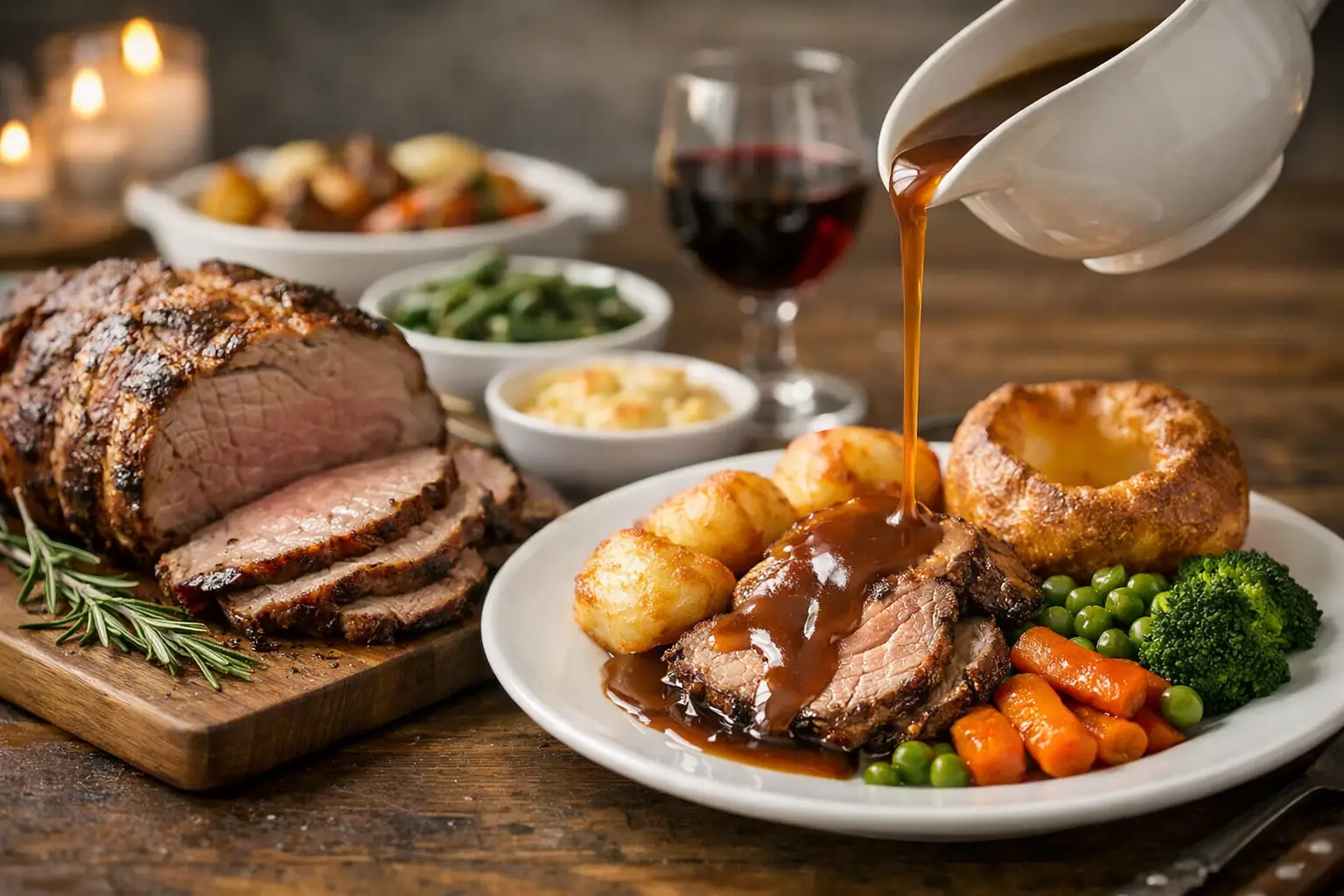
At its best, a roast feels both timeless and considered. Nothing needs to be complicated, but every element should earn its place. The crisp potato, the rich gravy and the Yorkshire pudding that arrives with a little lift are not extras. They are the reason the meal becomes a proper occasion.
What makes a great Sunday roast?
The short answer is consistency. A great roast brings together ingredients that are well chosen and cooked with confidence, then serves them at their best. The longer answer is that the dish depends on contrast: tender meat against crunchy roasties, savoury gravy against sweet carrots, soft Yorkshire pudding beside crisp greens.
There is also a question of generosity. A Sunday lunch should feel abundant without becoming a pile of food with no care behind it. You should be able to see each part of the plate, enjoy it in its own right and still have enough gravy to bring it all together. It is comfort food, certainly, but comfort does not mean cutting corners.
A good pub roast has another ingredient that cannot be plated: timing. Hot food, a relaxed table and no feeling that you need to rush away make a considerable difference. The meal should leave room for conversation, a pudding if the mood takes you, and perhaps a walk afterwards.
Start with meat worth roasting
Whether you choose beef, pork, chicken or a vegetarian centrepiece, the main event needs flavour before anything else is added. Good roasting is about respecting the cut and cooking it accurately, rather than masking it with seasoning or sauce.
Beef benefits from a well-seasoned crust and a resting period that allows the juices to settle back into the meat. It should be tender and neatly carved, with a little rosy colour where the cut suits it. Pork needs crackling with genuine crunch, not a chewy afterthought, while keeping the meat beneath moist and full of flavour. Roast chicken should have crisp, golden skin and succulent meat right to the leg.
There is no single ‘best’ choice, because the right roast depends on appetite and occasion. A richly marbled cut of beef is wonderfully indulgent, but a lighter roast chicken may suit a family lunch or a warm afternoon in the beer garden. The standard is the same in every case: proper seasoning, careful cooking and a portion that feels satisfying.
For vegetarians, the plate should never feel like an afterthought. A well-made nut roast, seasonal vegetable tart or mushroom-led dish can have the depth, texture and substance of any traditional roast. A great Sunday offering gives everyone at the table something they are genuinely pleased to order.
The value of a proper rest
Resting meat is one of those quiet details that separates a decent roast from a memorable one. Carve too soon and the juices run out onto the board. Rest it properly and each slice stays tender, while the kitchen has time to finish the gravy and bring the rest of the plate together. It is not glamorous, but it is the kind of patient cooking a Sunday lunch deserves.
Roast potatoes should be crisp, not merely brown
Everyone has their own measure of a good roast potato, but most people agree on the essentials: a crunchy, golden outside and a fluffy middle. They need enough seasoning to stand on their own, and they should arrive hot enough to crack gently under the fork.
The best roasties are made with a little preparation. Parboiling creates the soft edges that become crisp in the oven, while hot fat and plenty of space in the roasting tray stop them from steaming. The result is texture, rather than a uniformly hard shell or a potato that has simply been coloured in the oven.
This is where quantity matters too. One roast potato can feel decorative. A generous serving signals that lunch is meant to be enjoyed. The same applies to vegetables: cook them with care, retain their colour and bite, and season them well. No one wants a roast built around grey, over-boiled vegetables.
Yorkshire puddings and gravy set the standard
A Yorkshire pudding should be light, crisp at the edges and spacious enough to catch a spoonful of gravy. It does not have to be enormous to be impressive. The pleasure is in that contrast between a delicate top and a soft, warm centre.
Gravy, meanwhile, should taste of the roast, not just salt and thickener. A proper gravy has savoury depth, made from good stock and roasting juices, with enough body to coat the food without turning every item on the plate soggy. It should bring the elements together while still allowing the crisp potatoes and crackling to keep their texture.
There is a balance to strike. Too little gravy makes a roast feel dry and mean. Too much can overwhelm the plate. Serving extra at the table is often the simple answer, letting each guest have their roast exactly as they like it.
Seasonal vegetables bring freshness to the plate
The vegetables are not there merely to make the meal look virtuous. They provide the lift that keeps a rich roast from becoming heavy. Sweet roasted carrots, buttery greens, red cabbage with a little sharpness, or cauliflower cheese with a golden top can all work beautifully, depending on the season and the main dish.
Variety matters more than sheer volume. A mixture of colour, sweetness and freshness makes every forkful interesting. A pub kitchen may adapt its vegetables through the year, and that is a good thing. Sunday roasts should feel rooted in tradition, but the best ones still make the most of what is in season.
The setting matters as much as the cooking
Even a beautifully cooked roast can lose some of its charm if it arrives late, cool or without a welcome. Sunday lunch is one of the few meals where people are happy to linger, so the atmosphere should invite them to do exactly that.
A historic country pub setting adds something hard to recreate at home: the gentle buzz of other tables, the clink of glasses, the warmth of the room and the relief of not having to wash up. For families, it is the chance to enjoy a proper meal together without anyone being stuck in the kitchen. For couples and friends, it is an easy way to make an ordinary Sunday feel a little more special.
At The Merry Fiddlers, that sense of relaxed occasion matters. A roast should suit a long catch-up, a birthday gathering or a simple last-minute lunch after a country walk. Friendly, attentive service is part of the recipe, especially when children, dietary requirements or a four-legged friend are part of the plan.
A great roast leaves you content, not defeated
Generous does not have to mean overwhelming. The ideal Sunday roast is filling enough to make dessert a considered decision, yet balanced enough that you leave feeling content rather than defeated. It should be warm, well-paced and full of the flavours people return for week after week.
That is why the details matter. Choose the roast that suits your table, make time for it, and do not underestimate the pleasure of crisp potatoes, rich gravy and good company. A proper Sunday lunch is one of life’s simplest treats when it is done with care.