Can dogs go in pub bars? Learn how UK rules, licence conditions, food areas and good manners shape a relaxed, dog-friendly pub visit for everyone alike.
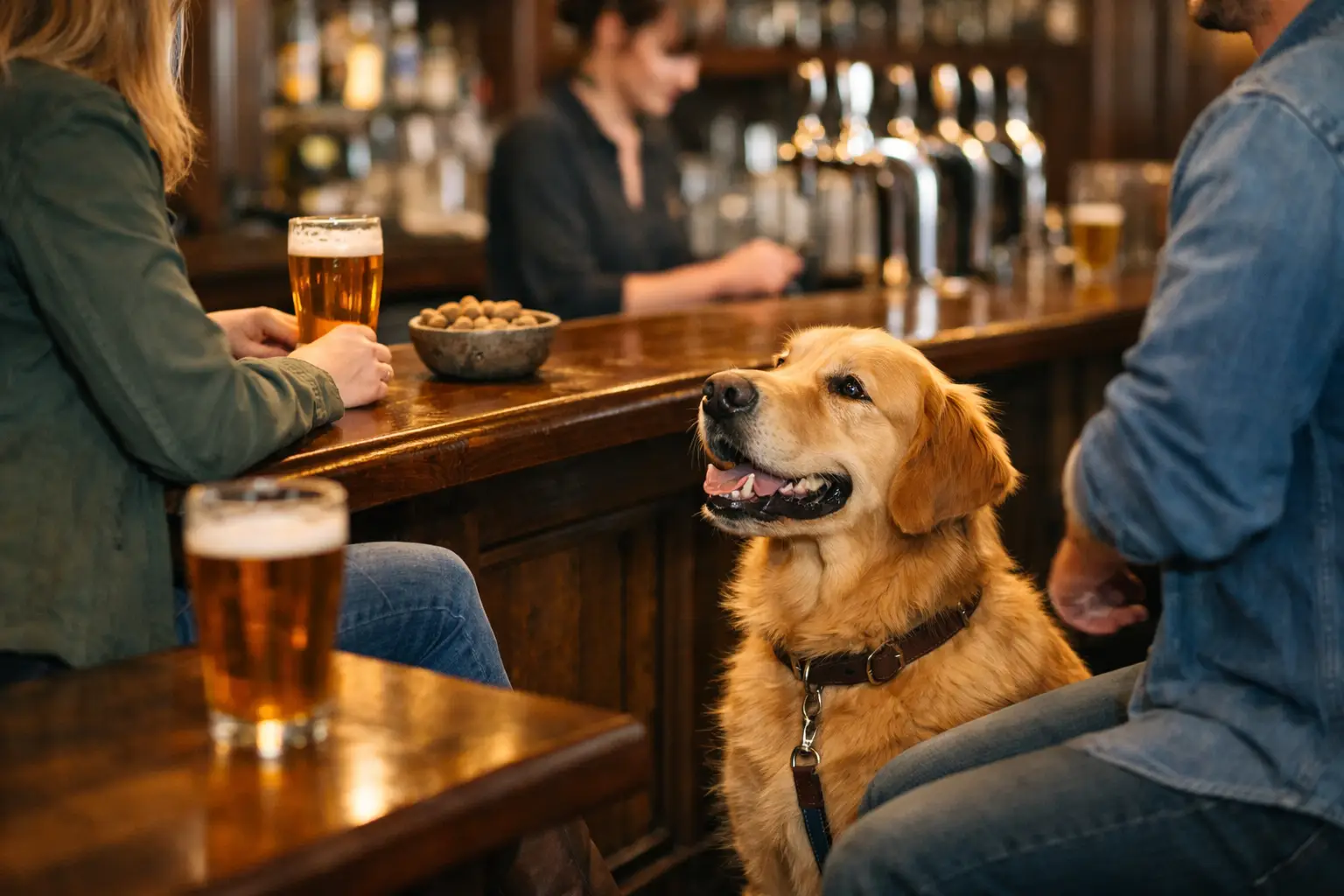
A country walk, a well-earned pint and a cosy table by the fire make a fine afternoon. But before clipping on the lead and setting off, many owners ask the same question: can dogs go in pub bars?
The short answer is often yes, but it is never safe to assume. Every pub sets its own policy, and the answer can change between the bar, restaurant, garden and private dining areas. A little planning helps make sure your dog is as welcome as you are - and that everyone around you can relax too.
Can dogs go in pub bars in the UK?
There is no blanket UK law that bans dogs from pubs or bars. In most cases, it is the licence holder or venue management who decides whether pet dogs are allowed and where they may sit.
That is why one traditional village pub may happily welcome dogs in the bar and beer garden, while another may limit them to outdoor tables or have a no-dog policy indoors. The decision usually comes down to the layout of the premises, food service, available space, customer comfort and the team’s ability to keep the venue clean and safe.
A pub that serves food is not automatically unable to admit dogs. Food hygiene rules focus particularly on keeping animals away from food preparation and storage areas, where hygiene standards must be tightly controlled. Front-of-house areas are different, but a venue may still choose restrictions that suit its operation.
Assistance dogs are a separate matter. They are working animals, not pets, and are generally entitled to accompany their handler into places open to the public. If you are ever unsure about access arrangements, it is sensible to contact the venue directly before visiting.
Why pub policies differ from table to table
A good pub has to work for lots of people at once: dog owners, families with prams, diners enjoying a special meal, friends meeting for drinks and guests with allergies or a nervousness around dogs. A clear dog policy is not about making a venue less welcoming. It is about making the welcome work well for everyone.
Busy dining rooms can be difficult for dogs, especially at popular Sunday lunch times. There may be hot plates moving between tables, chairs close together and plenty of tempting smells. A lively bar can be equally challenging if there is little room for a dog to settle away from foot traffic.
Outdoor areas are often the easiest option when the weather allows. A spacious beer garden gives dogs more room and helps keep walkways clear. Yet even a garden may have particular rules during events, private functions or peak periods, so checking ahead remains the best approach.
Some venues welcome dogs in designated spots only. Others ask that dogs remain on leads, stay off furniture and do not enter certain parts of the building. These are sensible boundaries, particularly in a pub that offers both relaxed drinks and a more polished restaurant experience.
Check before you travel
The simplest way to avoid an awkward arrival is to ask the pub before leaving home. Policies can change with the season, the day of the week or the type of booking, and online information is not always updated immediately.
When you call or message, ask whether dogs are allowed indoors, whether there is a dog-friendly dining area, and whether outdoor tables can be reserved. If you are meeting a group or bringing children, mention that too. The team can then guide you towards the most comfortable table for your party.
If you are planning a visit to The Merry Fiddlers after a walk around Epping, confirming the latest arrangements in advance is the easiest way to start your visit on the right foot - or paw.
It is also worth being honest about your dog’s temperament. A calm, social dog that settles beside your chair is likely to enjoy a pub visit far more than a young dog who finds strangers, food and noise overwhelming. There is no shame in choosing a quieter time, sitting outside, or enjoying a drink at home after a big walk instead.
Pub manners that make dogs welcome
Dog-friendly pubs rely on considerate owners. Your dog may be a much-loved member of the family, but other guests should not have to step around them, listen to persistent barking or worry about food being snatched from a nearby table.
A few habits make all the difference:
- Keep your dog on a short lead and close to your table, never stretched across an aisle or doorway.
- Bring water, a portable bowl and a familiar mat or blanket to help your dog settle.
- Choose a spot with enough space for staff and other guests to pass comfortably.
- Do not feed your dog from plates, cutlery or the table, even if they give you their best hopeful look.
- Step outside if your dog becomes unsettled, noisy or overly interested in another guest’s meal.
Avoid tying a lead to a lightweight chair or leaving your dog unattended while you order. Even friendly dogs can be startled by a dropped glass, a child running past or another dog appearing unexpectedly. A relaxed pub visit depends on you being able to read your dog and respond quickly.
Choosing the best time for a dog-friendly visit
Timing can turn a good visit into a great one. Mid-afternoon on a weekday is often more peaceful than a packed Friday evening or the busiest part of Sunday lunch. Your dog will have more space to settle, and you are more likely to find a table away from main walkways.
Give your dog a proper walk before arriving rather than relying on the pub garden as their exercise. A dog that has had a sniff, stretch and toilet break is usually calmer indoors. Arriving with a wet, muddy dog is not always ideal either, especially in a smart dining environment, so a towel in the car can be surprisingly useful after a muddy countryside walk.
Think about the weather too. Gardens are lovely in sunshine, but a hot patio may be uncomfortable for a dog, while cold or heavy rain can make an outdoor booking less enjoyable. Ask whether covered seating is available, but remember that a covered area may still feel busy or noisy.
Food, treats and the temptation of the table
Pubs are full of aromas designed to make people hungry, and dogs notice every one of them. Roasts, chips, gravy and rich sauces may be delicious for us, but sharing table food can upset a dog’s stomach and encourages them to beg from other guests.
Keep treats small, familiar and discreet. Fresh water is the priority, particularly in warm weather. If the pub provides a water bowl, it is still helpful to carry your own in case the shared bowl is busy, empty or unsuitable for your dog.
Never assume a dog menu, pup cup or complimentary treat is available. These extras vary from venue to venue, and dogs with allergies or sensitive digestion are usually better sticking to what they know.
When a pub visit may not be right for your dog
Being dog-friendly does not mean every dog will enjoy every pub. Puppies still learning to settle, dogs recovering from illness, anxious rescues and dogs who react strongly to people or other animals may find the experience stressful.
Watch for signs that your dog has had enough: repeated barking, panting when it is not warm, pacing, whining, pulling towards the exit or refusing treats they would normally accept. Leaving early is a considerate choice, not a failed outing.
The same applies if your dog is muddy, unwell or has fleas, or if they are in season. A pub is a shared space, and good owners protect the comfort of other guests as well as their own dog.
A great local pub visit should feel easy. Check the policy, choose the right setting and bring a dog who is ready to settle beside you. Then there is only one job left: enjoy good company, a well-earned drink and the pleasure of knowing your four-legged companion is comfortable too.