Wondering how to choose children's menu dishes? A practical guide for parents seeking tasty, balanced options and a relaxed family meal out in Epping.
A family meal out goes well when nobody has to negotiate over every bite. Knowing how to choose a children's menu means looking beyond the promise of chicken nuggets and chips. The best choice is one your child will happily eat, that suits their appetite and needs, and lets everyone at the table relax and enjoy the occasion.
Start with your child, not the menu
Children do not all eat in the same way, even when they are the same age. A confident seven-year-old may happily choose fish, pasta or a smaller roast, while a hungry toddler may be content with a few familiar bites and some vegetables. Before deciding, think about what they usually enjoy at home and how adventurous they tend to be when eating out.
Familiar food has real value, especially for younger children or those who find busy surroundings overwhelming. A simple pasta dish, grilled chicken or a well-made burger can make a meal feel easy. Familiar does not have to mean plain, though. A good children's menu can offer recognisable favourites prepared with care, alongside choices that gently broaden the palate.
It also helps to consider the time of day. After a long walk, a football match or an afternoon in the garden, children may want something more filling. At a celebratory lunch with snacks and pudding on the horizon, a lighter choice may be plenty. There is no prize for ordering the largest plate if it leaves them uncomfortably full or creates unnecessary waste.
How to choose a children's menu with quality in mind
A thoughtful children's menu should feel like part of the kitchen, not an afterthought. It does not need to copy the adult menu exactly, but it should show the same care in its ingredients, cooking and presentation. Look for a clear choice of dishes rather than an endless list. Too much choice can be surprisingly difficult for children, while a small selection of appealing options makes ordering calmer.
Variety matters. A menu that only offers beige fried food may suit a fussy day, but it gives families little flexibility over repeat visits. Ideally, there will be a mix of comforting classics and lighter options, with different proteins and a vegetarian choice where possible. Freshly cooked food, sensible portions and sides that go beyond chips are all encouraging signs.
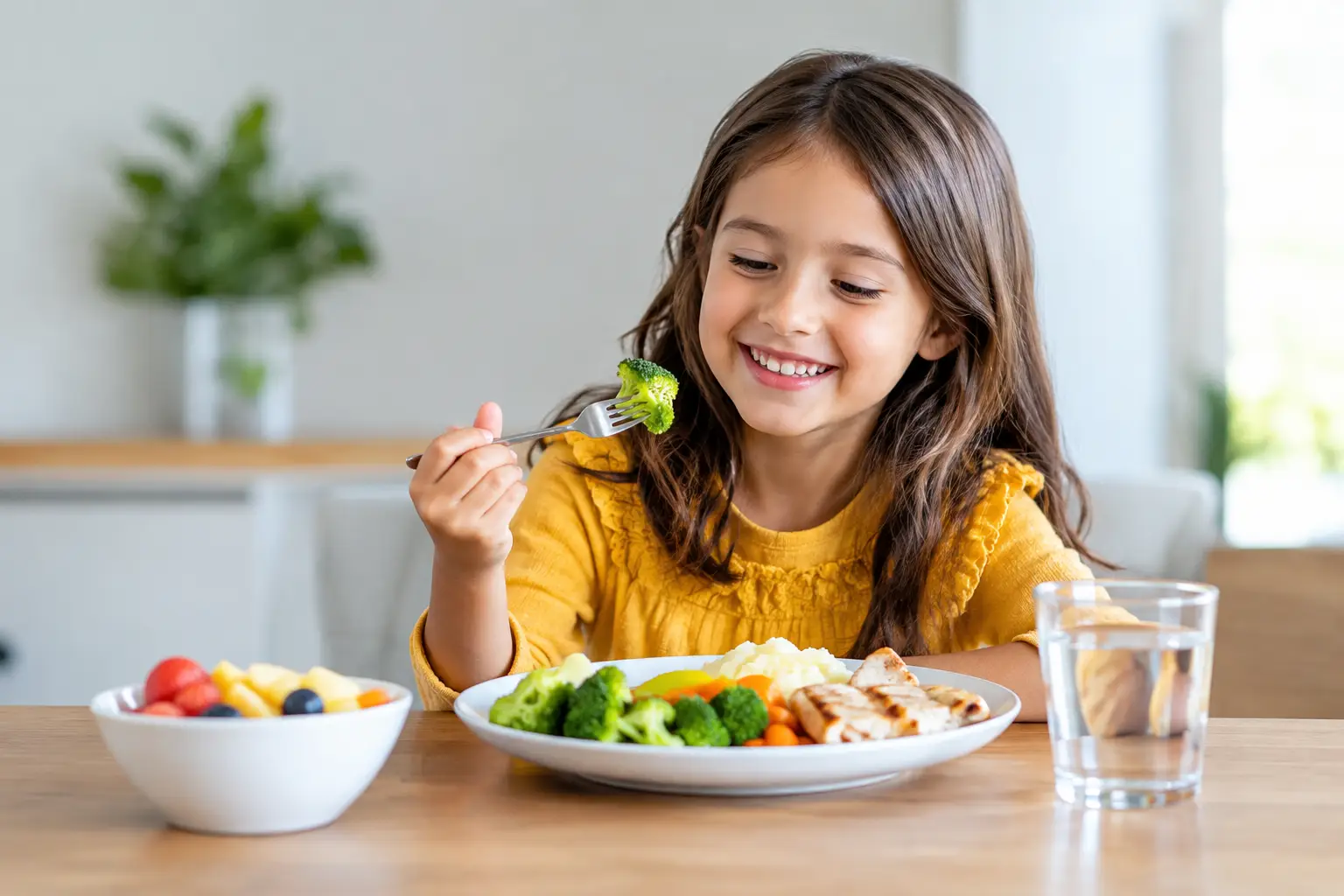
That said, balance is not about making every meal worthy of a school lunchbox. Eating out is a treat, and chips, a pudding or a favourite sauce can absolutely have their place. The aim is simply to give parents a choice: perhaps peas, salad, seasonal vegetables or garlic bread alongside the familiar option. Children are more likely to try something new when it arrives beside something they already trust.
Check portion size before you order
A children's portion should be satisfying, not daunting. Large servings can be good value for older children with bigger appetites, but they are not always right for little ones. If the menu does not make portions clear, it is perfectly reasonable to ask the team. They may be able to suggest the most suitable dish, offer a side separately, or advise whether a starter-sized option would be enough.
Sharing can work well for siblings with smaller appetites, particularly if there are a few sides on the table. But it depends on the children and the dish. Two tired children sharing one bowl of pasta can quickly become less peaceful than ordering two smaller meals. Knowing your own family is more useful than following a fixed rule.
Make dietary needs part of the conversation
For families managing allergies, intolerances or religious dietary requirements, a children's menu needs more than a few symbols beside each dish. Clear information is a helpful starting point, but speaking to the serving team is the safest route. Explain the requirement clearly and ask whether ingredients, preparation methods and possible cross-contamination have been checked with the kitchen.
Do not feel awkward about asking questions. A welcoming restaurant expects them, particularly when children are involved. It is better to take an extra minute when ordering than spend the meal worrying about what may be in a sauce, coating or dessert.
For less formal preferences, small adjustments may be possible too. Some children prefer sauce on the side, no garnish, plain pasta or vegetables served separately. Flexibility often depends on how busy the kitchen is and what a dish involves, so it is best to ask politely rather than assume. A good meal out should feel accommodating without putting pressure on the team to recreate every dish from scratch.
Look beyond the plate
The right menu matters, but the setting matters just as much. A child may love the food yet struggle to enjoy it in a room that feels rushed, cramped or unsuitable for families. When deciding where to eat, look for the practical details that make a difference: space for a pushchair, high chairs, accessible facilities, an outdoor area and a team that is comfortable welcoming children.
Timing can make the experience easier as well. An earlier table is often calmer for young families, particularly at weekends. Children are less likely to be overtired, and you can enjoy the meal before the busiest part of service. If you are visiting with grandparents, cousins or friends, choosing a venue with room to settle in helps everyone enjoy the occasion rather than watching the clock.
A countryside pub setting can be particularly useful when children need a little breathing room between courses. At The Merry Fiddlers, a family meal can be part of a wider outing, with the comfort of a traditional pub and space to enjoy the surroundings. The goal is not to keep children perfectly still for an hour. It is to choose an environment where they can be themselves while other diners can enjoy their own meal too.
Let children have a say
Giving children a simple choice builds confidence and often reduces mealtime stand-offs. Instead of presenting the whole menu as a test, narrow it down: would they prefer pasta or chicken? Vegetables or salad? Ice cream or a brownie to share? They still feel included, but the decision stays manageable.
It can also be worth encouraging one small new element without making it a battle. A child who always orders a burger might try a different side; a pasta fan might taste a little of a parent's roast. Keep the pressure low. Curiosity grows far more easily when food is enjoyable and the table feels relaxed.
Adults can help by ordering food they are happy to share a taste of. Children often want what is on a grown-up plate, particularly when it looks and smells more interesting than their own. A bite of properly cooked fish, roast potatoes or seasonal vegetables can be more persuasive than a lecture about trying new things.
Plan for drinks and pudding too
Drinks are easy to overlook, yet they can affect how well the meal goes. Water on the table is always useful, especially if your child has been active. Juice, squash or a fizzy drink may be part of the treat, but having water available avoids a sugar rush before the main course has arrived.
When it comes to pudding, decide together whether it is part of the plan. A shared dessert can be ideal after a generous main, while an individual pudding may make a birthday lunch or special outing feel more memorable. If your child is likely to fill up on chips or bread, it is fine to order pudding later rather than promising it from the start.
The best children's menu is not necessarily the one with the most items or the lowest price. It is the one that gives your family confidence: food your child can enjoy, options that suit their needs, and a setting where everyone feels welcome. Choose with a little thought, then settle in, eat delicious food and enjoy being together.