Learn how to choose cocktails with dinner, matching flavour, texture and occasion for a relaxed, memorable meal at your favourite local pub with care.
A well-made cocktail can turn a familiar supper into something worth lingering over. The trick with how to choose cocktails with dinner is not finding the strongest drink on the menu. It is choosing one that gives the food room to shine, suits the pace of your meal, and feels right for the company around the table.
At a country pub table, that might mean a bright gin cocktail before a crisp starter, something bold beside a steak, or a shorter, sweeter serve after pudding. There are no rules that cannot be broken, but a few good principles make choosing far easier.
Start with the dish, not the drinks list
Look first at the main flavours on the plate. Is the dish rich and buttery, smoky from the grill, lightly spiced, salty, creamy or full of fresh herbs? Your cocktail should either lift those flavours with contrast or sit alongside them with a similar character.
A rich dish usually welcomes freshness. If you are enjoying pork belly, confit duck, a creamy chicken dish or a generous Sunday roast, a cocktail with citrus, apple, dry vermouth or a gently bitter edge can clear the palate between mouthfuls. A gin sour, a French 75-style serve or a well-balanced Collins can all bring that welcome brightness.
With lighter dishes, avoid overpowering the plate. Delicate fish, salads and simply dressed seasonal vegetables are easily lost beside heavy cream liqueurs, dark rum or very sweet syrups. Choose a clean cocktail with restrained sweetness instead: perhaps gin with elderflower and lemon, vodka with cucumber, or a spritz with a dry finish.
For dishes with real depth - a charred steak, slow-cooked lamb, venison or a rich mushroom sauce - you can be more adventurous. A whisky-based cocktail, an Old Fashioned with sensible sweetness, or a bourbon drink with orange and bitters has enough structure to stand alongside fuller flavours. The trade-off is weight. If your meal is already indulgent, one rich cocktail may be plenty.
Match intensity before matching ingredients
You do not need a cocktail made with blackberry to drink with a blackberry jus. In fact, exact ingredient matching can make a meal feel overly sweet or repetitive. A better approach is to match intensity.
Think of a delicate crab starter and a powerful smoky mezcal cocktail. Both may be delicious separately, but together the drink will take over. By contrast, a lightly savoury martini or a citrus-led highball has enough personality to be interesting without drowning out the food.
The same works at the other end of the scale. A peppery, grilled main can flatten a fragile cocktail, while a drink with spice, oak, bitterness or a darker fruit note is more likely to hold its own. When in doubt, choose the lighter drink for the first course and move towards fuller flavours with the main.
Use contrast to refresh the palate
Contrast is often the easiest route to a successful pairing. Acid cuts through fat, fizz refreshes, and gentle bitterness keeps sweet or creamy food from becoming too much.
A classic example is fried food. Whether it is crispy calamari, fish and chips or golden croquettes, bubbles and citrus are your friends. A sparkling cocktail, a vodka soda with fresh lime, or a Tom Collins-style drink brings lift to each bite. The same principle applies to creamy sauces and buttery pastry.
Spiced food can benefit from a slightly sweeter cocktail, but keep it measured. A little mango, passion fruit or honey can soften chilli heat; too much sugar can make spice feel fiercer. Choose fruit-forward drinks with real acidity rather than thick, dessert-like serves.
Choose harmony when the food is already bright
Some dishes do not need cutting through. A herb-led chicken dish, roasted squash, beetroot, or a plate built around berries and game can work beautifully with a cocktail that shares its aromatic direction.
Gin, basil, rosemary, thyme, apple, pear and berry notes can create that sense of harmony without copying every ingredient on the plate. The goal is a pairing that feels considered but still relaxed - not a chemistry lesson before dinner.
Consider sweetness, dryness and texture
Sweetness is the detail most likely to upset a pairing. A very sweet cocktail before or alongside a savoury main can make food taste flatter, saltier or less nuanced. This is why a dry martini, a sharp sour or a long drink with soda often works better through dinner than a creamy, syrup-heavy cocktail.
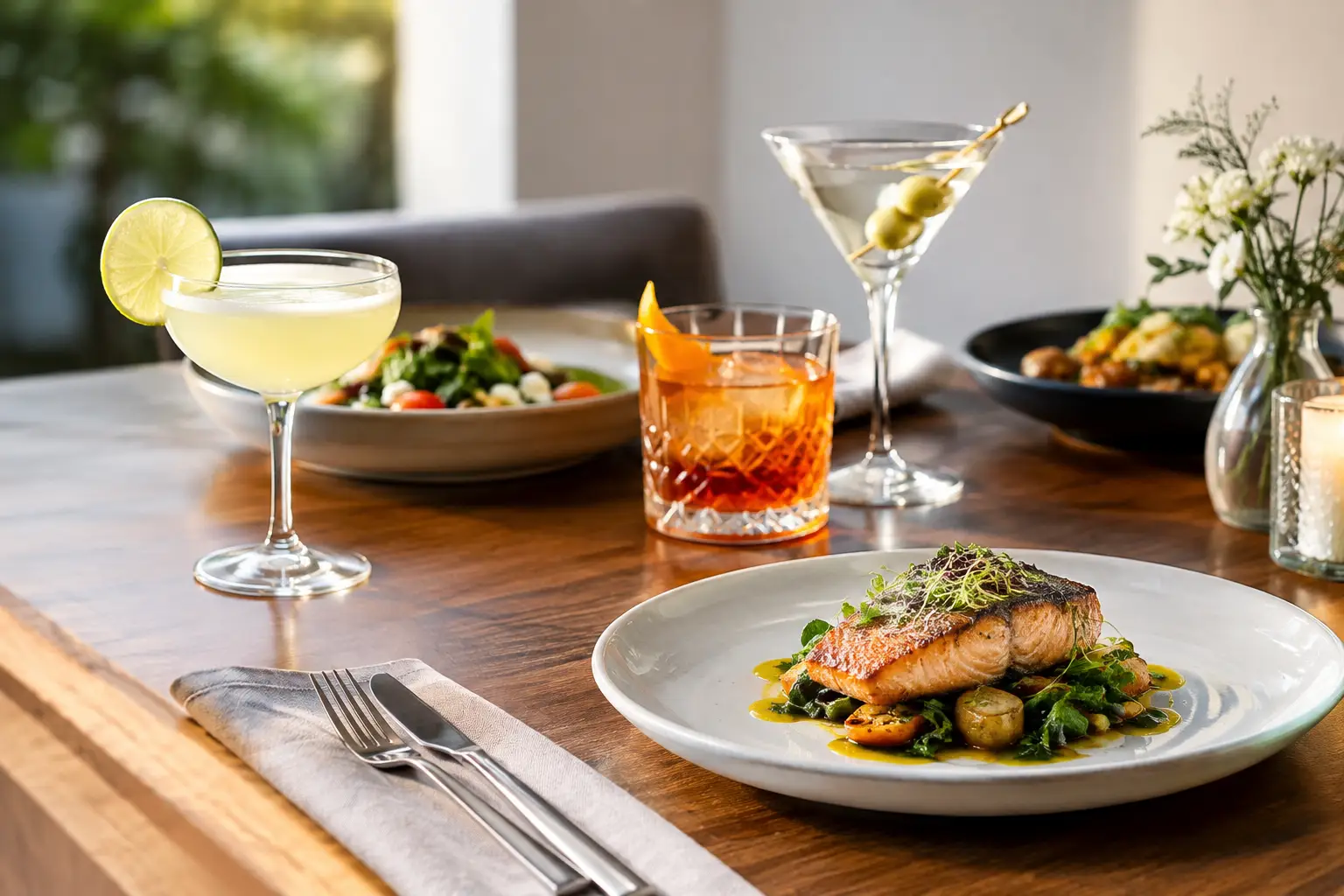
That does not mean avoiding sweetness altogether. It simply needs balance. A daiquiri-style drink with fresh lime can suit grilled seafood or spicy dishes because its sugar is held in check by acidity. A fruitier cocktail can work with a summer salad or a lighter lunch, particularly when it is served long over ice.
Texture matters too. A bubbly, refreshing cocktail feels different beside food from a spirit-forward drink served short. Fizz is generally forgiving with a wide range of dishes and works well when you are chatting, sharing starters and taking your time. Short cocktails are more intense, so they tend to suit slower meals, richer mains or an after-dinner moment.
How to choose cocktails with dinner by course
You need not commit to one cocktail for an entire three-course meal. If you are celebrating, changing your drink with the food can make the evening feel more special. It also allows each course to have its own character.
For starters, look for crispness. Cocktails with lemon, grapefruit, sparkling wine, cucumber, dry gin or vodka are usually a comfortable fit. They wake up the appetite rather than filling you up before the main event.
For mains, take your cue from cooking method and sauce. Grilled food can cope with smoky or spirit-led notes. Rich braises enjoy citrus or bitterness for balance. Herbaceous dishes often pair well with botanical gin, while a fruity, gently spiced cocktail can sit nicely with glazed pork, duck or dishes carrying a touch of chilli.
Dessert is where a sweeter cocktail earns its place, but it should not be sweeter than the pudding itself. Chocolate, caramel and coffee desserts are natural partners for espresso, dark rum, whisky or orange notes. With fruit puddings, choose a drink with freshness - sparkling wine cocktails and berry-led serves can be far more satisfying than anything too creamy.
If you would rather have one drink throughout, choose a versatile middle ground. A gin and tonic with a thoughtful garnish, a light spritz, a Paloma-style cocktail or a whisky highball can travel from starter to main more comfortably than a very sweet or heavily oaked drink.
Let the occasion shape the choice
Dinner is not only about flavour. A birthday table, a quiet date, a family meal and a long catch-up with friends all call for a slightly different approach.
If the evening is sociable and unhurried, lower-alcohol long drinks make good sense. They stay cold, are easy to sip and give you plenty of space to enjoy the food. For a more celebratory meal, a glass with bubbles or a carefully made signature cocktail offers a proper sense of occasion without demanding too much attention.
On a cold evening, a warming whisky, rum or brandy-based cocktail can feel exactly right beside a hearty meal. On a sunny afternoon in the garden, a citrusy spritz or a botanical gin serve is likely to suit the setting better. Good pairing is partly about the plate and partly about the moment.
It is also perfectly reasonable to choose a mocktail. A non-alcoholic drink with citrus, fresh herbs, spice, bitters-free botanical flavours or soda can pair with food just as thoughtfully. The best choice is one that lets everyone enjoy the meal at their own pace.
Ask your server what is drinking well
Menus change, seasonal ingredients appear, and a bartender may have a particularly good recommendation for the dishes you have ordered. A quick conversation is useful, especially if you are torn between two cocktails or trying something unfamiliar.
Tell them what you are eating and whether you prefer dry, fruity, bitter, smoky or sweet flavours. Mention if you would like something light and refreshing, or something with a little more character. That is enough information for a helpful suggestion without making the choice feel formal.
At The Merry Fiddlers, the pleasure is in settling into the table, enjoying excellent food and choosing a drink that belongs with it. Trust your own taste, keep the balance in mind, and allow a good cocktail to make dinner feel like an occasion worth staying for.