Pub versus bistro: understand the food, drink and atmosphere differences, then choose the right setting for weekday meals, family lunches and celebrations.
A pint by the fire, a long lunch with friends, a family Sunday roast or a meal worth dressing up for: the pub versus bistro question is rarely just about the menu. It is about how you want the occasion to feel. One usually promises easy-going familiarity; the other often suggests a more food-led, intimate experience. The best choice depends on who is joining you, what you are celebrating and whether you want to linger over another round.
Pub versus bistro: the main difference
At its heart, a traditional pub is a place to drink, eat and spend time. The bar is often central to the room, people may call in without a reservation, and the atmosphere can shift naturally from a quiet midweek coffee to a lively Saturday evening. Food matters, of course, but the pub’s character is built around welcome, conversation and the freedom to make the visit your own.
A bistro is typically more centred on dining. The term comes from France and is associated with relaxed neighbourhood restaurants serving good, straightforward cooking in an informal setting. Expect tables to take priority over the bar, a menu with more of a restaurant focus, and a pace designed for sitting down to a proper meal.
That said, the line has become pleasantly blurred. Plenty of country pubs now serve carefully prepared dishes alongside real ale, cocktails and wine, while many bistros offer a bar stool and a very good aperitif. The name above the door matters less than the experience delivered once you are inside.
What a pub brings to the table
A good pub feels flexible. You might meet a friend for a drink and decide to stay for supper, bring the children after a walk, settle in for a leisurely Sunday lunch, or book a table for a birthday without making the whole evening feel formal. That adaptability is a large part of its appeal.
The drinks offering is usually broader too. A proper pub may have cask ales, lager, cider, spirits, wine, cocktails and soft drinks, with fresh coffee available for those stopping by earlier in the day. For groups with different tastes, that variety takes the pressure out of choosing where to meet.
There is also a particular comfort to a pub setting. Historic beams, a welcoming bar, dogs dozing near muddy boots, a beer garden in warmer weather and familiar faces all create a sense of local life. A pub can be the place you visit for no special reason at all, which is often why it becomes the place you choose for special reasons too.
Pub food has moved well beyond the basic
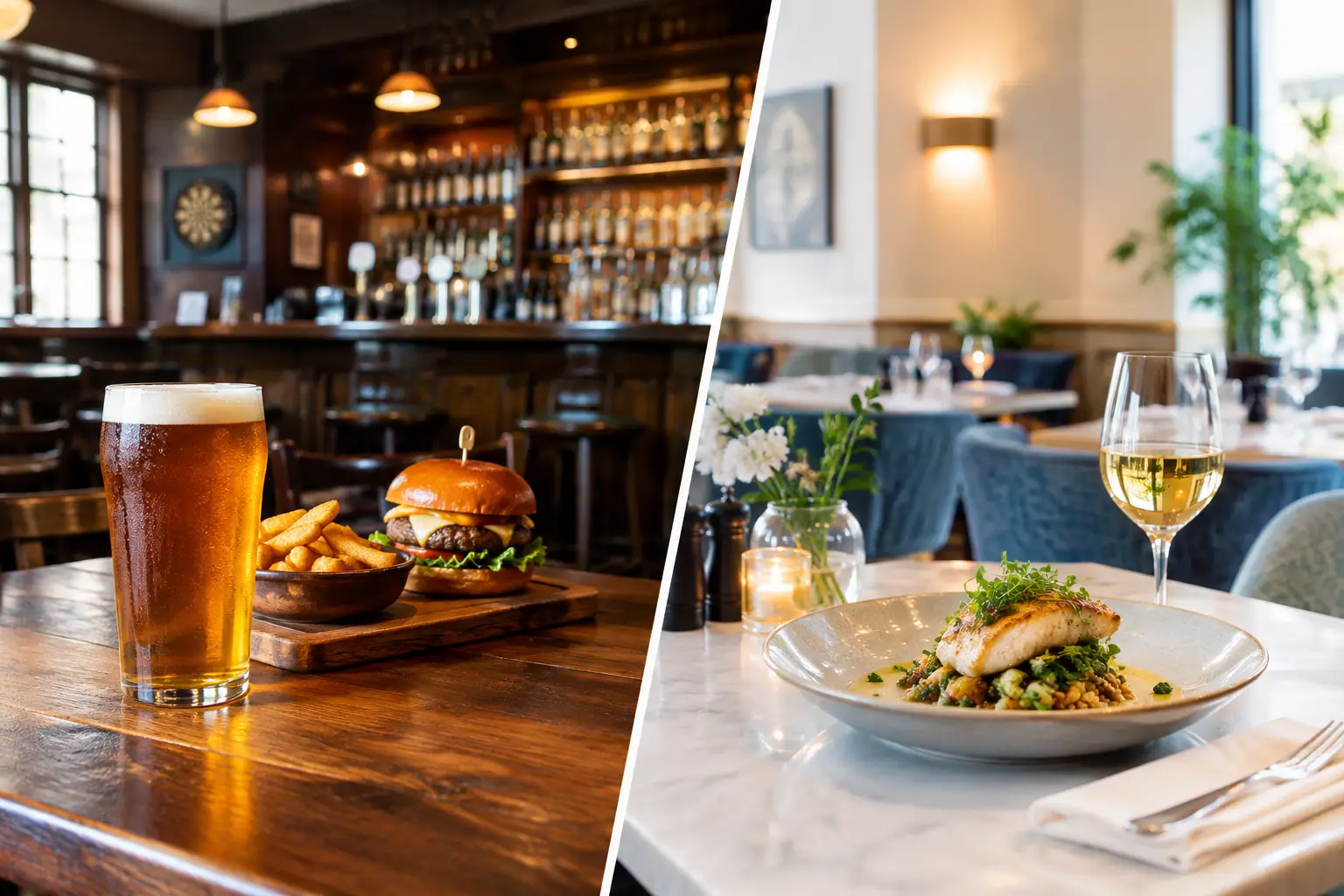
The old assumption that pub food is simply quick, heavy or predictable no longer holds up. Many pubs put real care into seasonal ingredients, classic techniques and presentation, while keeping the portions generous and the mood relaxed. You may find a carefully cooked fish dish, a well-made steak, a comforting pie or a polished dessert alongside the dependable favourites people genuinely want.
This is where a quality pub can offer the best of both worlds. The setting remains unpretentious, but the kitchen gives diners a reason to book ahead. It suits the couple who want a lovely meal without hushed formality, as well as the family looking for something better than an ordinary bite to eat.
What makes a bistro feel different
Bistros are often chosen when food is firmly the focus. Their menus may be shorter and change more regularly, with dishes shaped by French or European cooking, seasonal produce and a confident wine list. The room is generally arranged around the dining experience, so service may feel more paced and attentive from the moment you are seated.
The atmosphere can be warm and sociable rather than stiff, but it is usually less drop-in than a pub. You are more likely to reserve a table, arrive for a planned meal and stay within the rhythm of lunch or dinner service. For a date night, a catch-up over several courses or a meal where the food is the main event, that can be exactly right.
A bistro may also be the better fit for diners who prefer a smaller, more curated choice. There is something reassuring about a menu that does not try to cover every possible occasion. The trade-off is that it may be less convenient for a spontaneous pint, younger families, dog walkers or groups where some people want dinner and others simply fancy a drink.
Atmosphere matters as much as the menu
When deciding between a pub and a bistro, think beyond what you will order. Consider how much room there is to relax. Will the children be comfortable? Can everyone find a drink they enjoy? Is there outdoor space if the sun appears? Does the venue feel right for a quick weekday meal as well as a long-overdue celebration?
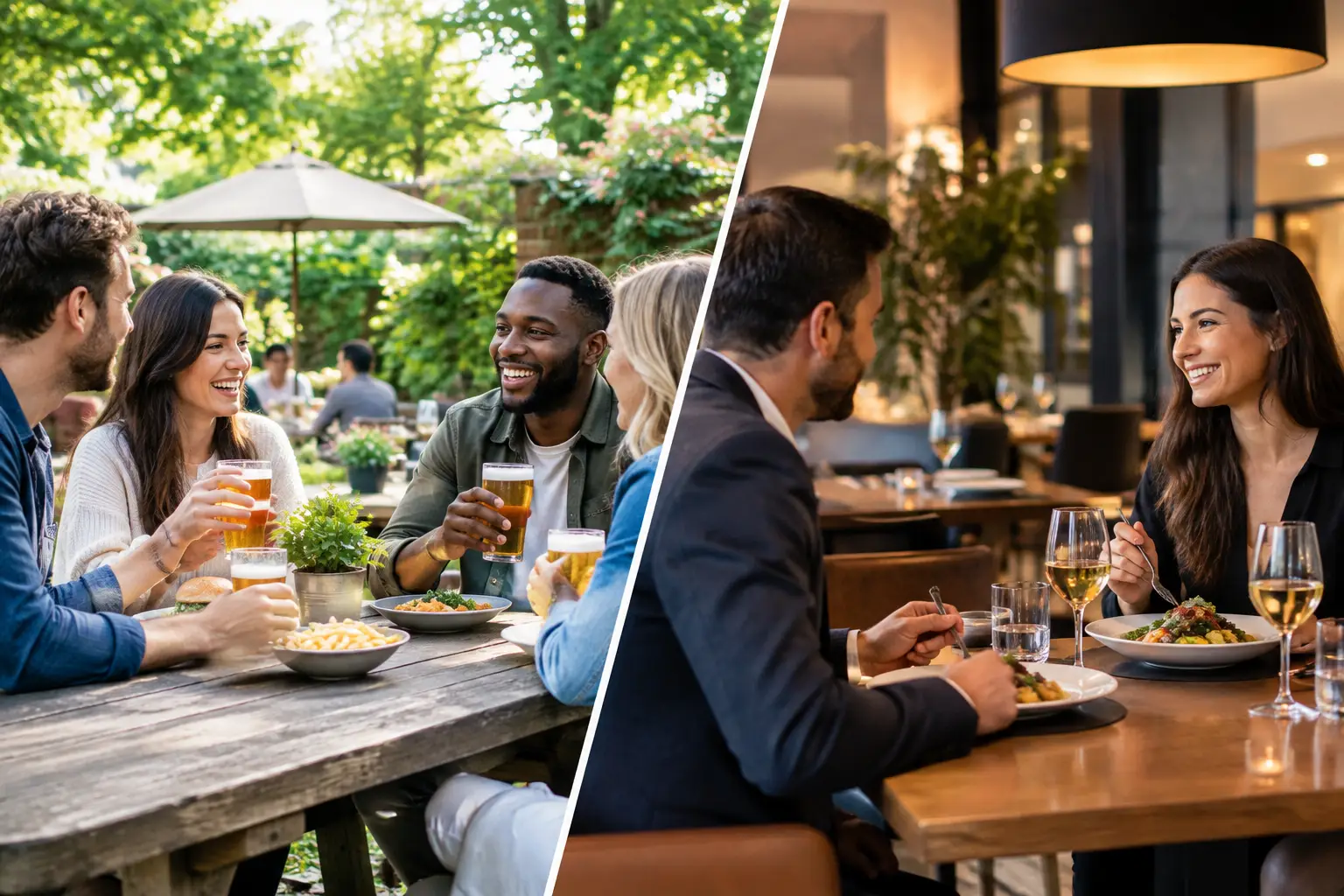
A bistro can feel special because it narrows the focus. You arrive to dine, the table is yours for the evening, and the setting encourages you to slow down. A pub can feel special because it opens things up. You can start with a drink at the bar, move to your table, order dessert if you fancy it, then carry on talking without feeling rushed towards the door.
Neither approach is automatically better. A quiet bistro may be perfect for an anniversary, while a country pub with excellent food can be the better choice for an anniversary dinner where you would also like a cocktail, a relaxed table and no need to change the way you usually enjoy yourselves.
Choosing for the occasion
For an informal meet-up, a pub often wins. It is easier for people to arrive at different times, order as they please and settle in without ceremony. A broad drinks range makes it especially useful when one person wants a pint, another wants a glass of wine and someone else is driving.
For a food-first evening for two, a bistro may appeal if you are looking for a more concentrated dining experience. However, do not overlook a pub restaurant with an à la carte menu and a thoughtful kitchen. It can offer the same sense of occasion with more choice around the edges.
Families often find pubs more practical, particularly those with a welcoming garden, space around the tables and a relaxed attitude to the realities of dining out with children. The important detail is quality: a family-friendly setting should still make every guest feel well looked after, whether they are sharing a Sunday roast or enjoying a slower grown-up lunch.
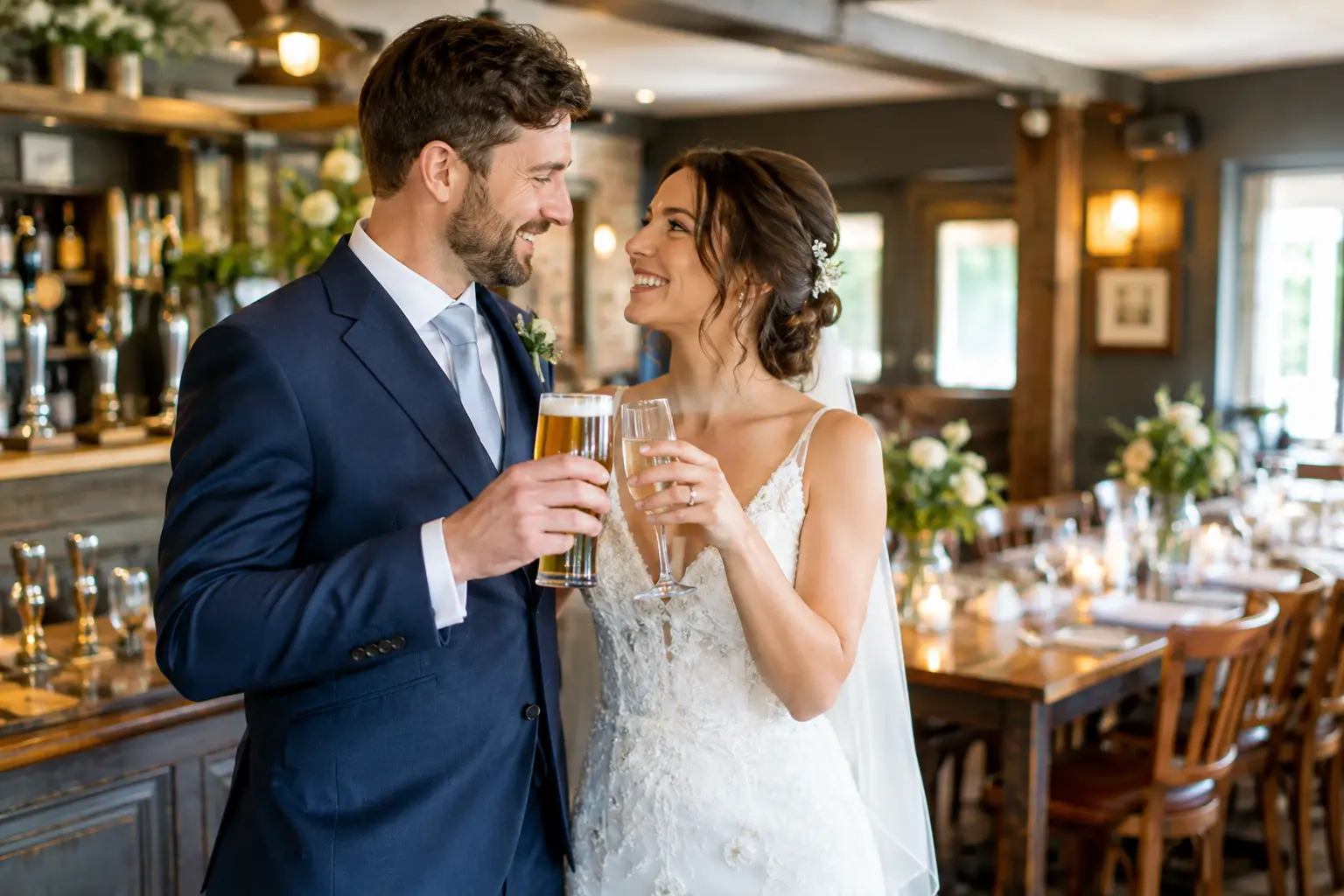
For celebrations, the question is less about pub versus bistro and more about whether the venue can look after your group properly. Private areas, flexible table arrangements, drinks choices and a team that understands occasions make a real difference. A place that is comfortable for a casual visit but capable of making a birthday, engagement or family gathering feel considered is often the strongest choice.
Why the best venues borrow from both
Many diners no longer want to choose between rustic warmth and restaurant-quality cooking. They want both in one reliable local setting. That means a proper welcome, a drink worth ordering, food prepared with care and a room that suits a Tuesday supper just as well as a milestone meal.
That blend is why the modern country pub has such lasting appeal. At The Merry Fiddlers, the pleasure is in being able to enjoy classic pub comfort alongside a more elevated approach to food, whether you are joining us for a coffee, a Sunday table or an occasion with the people you love.
The right place is the one that lets the occasion feel like yours. Choose a bistro when you want the evening to revolve around the meal; choose a pub when you want the meal, the drinks and the company to unfold at their own easy pace.