Learn how to plan sunday lunch with less last-minute rushing, from choosing your guests and menu to booking a welcoming Epping table everyone will enjoy.
Sunday lunch has a habit of looking effortless only when somebody has thought ahead. Whether it is a relaxed roast with the family, a catch-up with friends or a birthday gathering that deserves more than a quick meal at home, knowing how to plan sunday lunch means everyone can settle in and enjoy it, including the person who organised it.
The best lunches leave room for long conversations, an extra round of drinks and perhaps a pudding nobody initially planned to order. A little preparation gives the day its easy-going feel. Here is how to make that happen without turning a lovely Sunday into a timetable.
Start with the occasion, not the menu
Before choosing where to eat or what to cook, decide what the lunch is really for. A family meal with children has different needs from a quiet table for two, while a gathering for grandparents, friends and dogs may call for a little more space and flexibility.
Think about the number of guests, their ages and anything that will make the day more comfortable. Are there dietary requirements? Will anyone need a highchair? Is a pram coming along, or would a spot near the garden suit the group? These details are not fussy. They are what turn a booking or a home lunch into a properly welcoming occasion.
It also helps to set an expectation for the pace of the day. Some groups want an early table before afternoon plans; others want to arrive late morning and let lunch gently become the afternoon. If people are travelling from different parts of Epping and the surrounding area, allow a little breathing room around the chosen time.
How to plan Sunday lunch around your guest list
Sunday is one of the few days when people are often free at different times but eager to make plans. Send the invitation early, particularly for larger groups or popular dates such as Mother’s Day, Father’s Day and bank holiday weekends. You do not need a formal invite - a clear message with a suggested time, location and a request for dietary needs is usually enough.
For six people or more, get a firm idea of numbers a few days before. Last-minute changes happen, especially with families, but an accurate headcount makes seating and service far easier. It also prevents the awkward moment when an extra chair is needed just as plates begin to arrive.
If you are hosting at home, ask one or two guests to bring something specific rather than saying, “Bring anything.” A bottle of wine, a pudding or a simple starter can be genuinely helpful. Keep the main cooking under one person’s control, though. A Sunday lunch becomes less relaxing when every dish arrives with different instructions and timings.
When dining out, booking ahead is the kindest option for both your party and the venue. It gives you the best choice of table and lets the team prepare for allergies, children or any special request. For a special celebration, mention it when you book. Small details can make the table feel considered without making a fuss.
Choose a menu you can enjoy preparing
A good Sunday menu has a centrepiece, a few reliable sides and one or two things that can be made ahead. It does not need six vegetables, three sauces and a complicated starter to feel generous. In fact, fewer dishes done well usually make a better lunch.
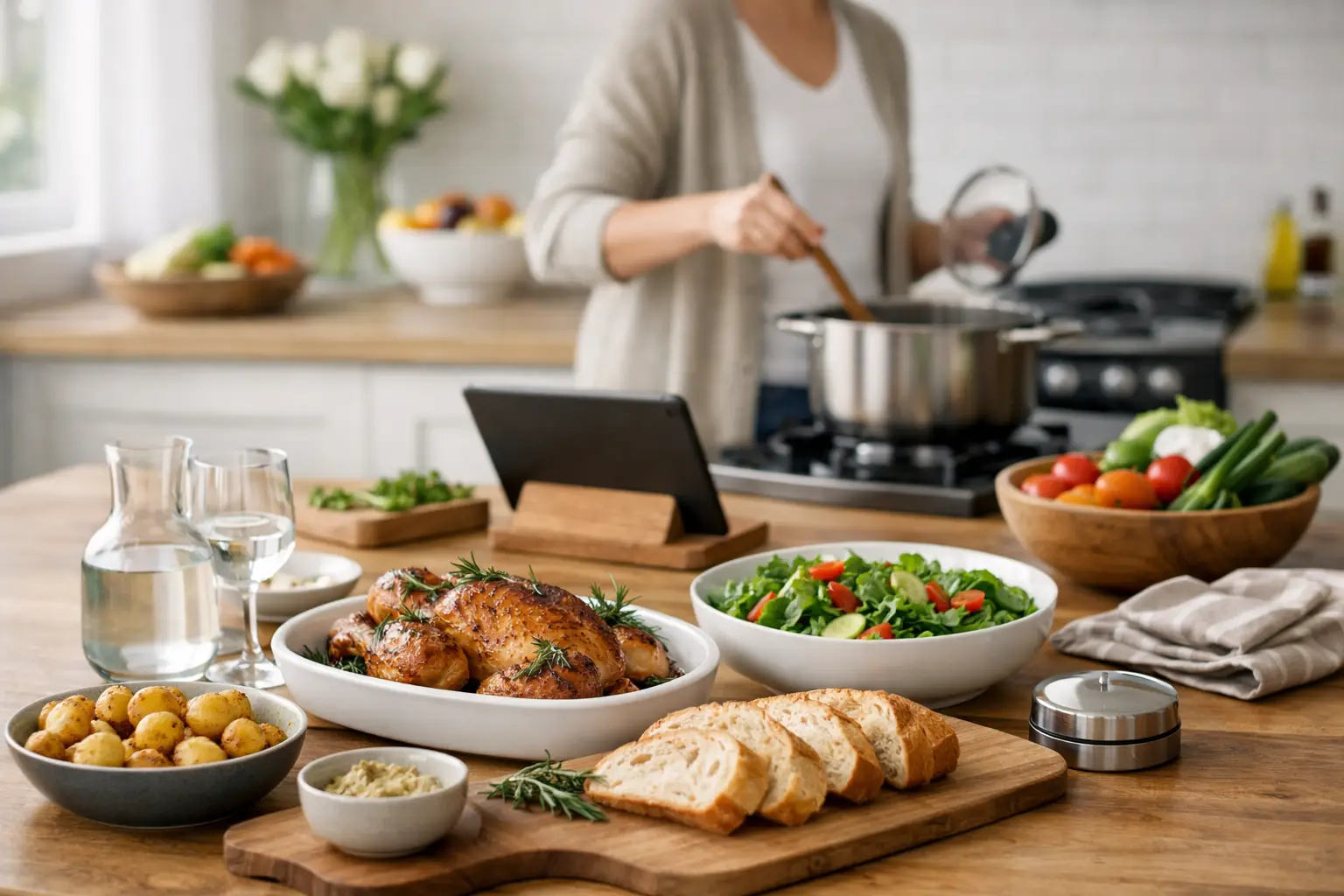
For a traditional roast at home, choose a main that suits your confidence and your oven. Chicken is forgiving and familiar; beef feels celebratory but needs careful resting; lamb brings plenty of flavour; and a well-made vegetarian centrepiece deserves as much attention as any roast. Build the rest around it with roast potatoes, seasonal vegetables, Yorkshire puddings where appropriate and a proper gravy.
Timing matters more than ambition. Write down when the main goes in, when the potatoes need turning, when vegetables start cooking and when the meat needs to rest. That final resting period is useful: it gives you time to warm plates, finish the gravy and welcome your guests without rushing about with a tea towel over your shoulder.
Pudding is where many hosts overcomplicate things. A make-ahead crumble, sticky toffee pudding, tart or cheesecake works beautifully, particularly with ice cream, custard or cream ready to serve. If you have spent the morning cooking, nobody will complain if dessert comes from a trusted local bakery or the supermarket. The point is to sit down together, not prove a point.
Make room for different appetites
Children, light eaters and hungry walkers do not always want the same portion or the same pace. Serve a simple nibble before lunch if guests are likely to arrive hungry, but avoid filling everyone up before the main event. Good bread, olives or crisps are plenty.
Dietary requirements should be planned as part of the meal, not added as an afterthought. A vegetarian gravy, gluten-free pudding or dairy-free alternative is straightforward when considered early and frustrating when someone is left trying to make do at the table. If you are unsure, ask. Most guests appreciate the care more than a grand gesture.
Decide whether home or a pub table suits the day
Cooking at home offers control. You can choose the playlist, linger in slippers and let children wander between the table and the sofa. It can be especially lovely for a small group when the menu is familiar and the washing-up feels manageable.
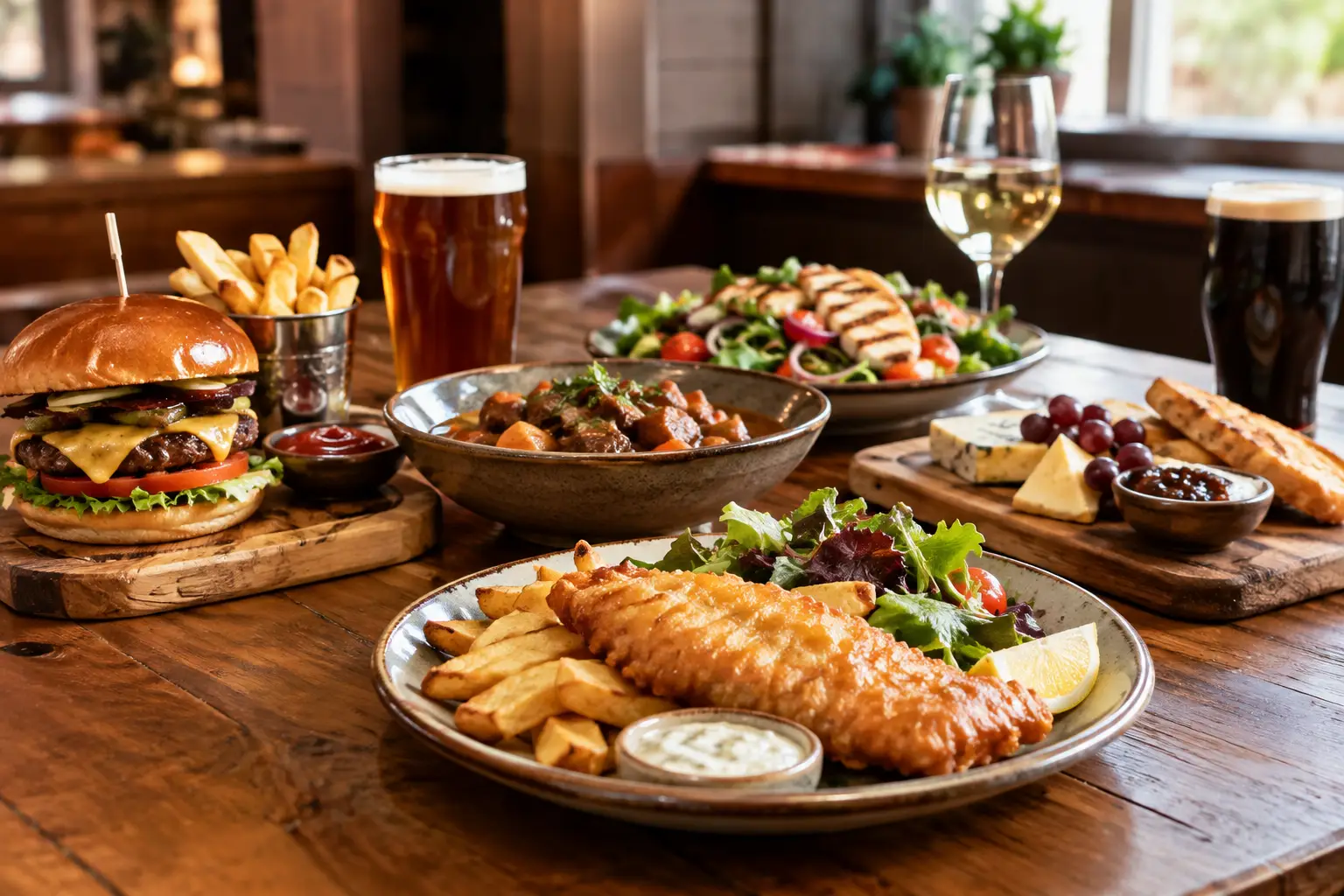
But eating out brings its own pleasures. There is no shopping list, no oven juggling and no clearing up after everyone leaves. A well-run country pub gives a Sunday lunch the occasion it deserves while keeping the atmosphere relaxed. It is often the better choice when the group is larger, the weather is uncertain, or the host would rather be part of the conversation than tied to the kitchen.
At The Merry Fiddlers, a Sunday table can suit everything from a family roast to a leisurely catch-up, with the character of a historic local pub and the reassurance of a more polished dining experience. If you are booking a restaurant, check the menu and serving times beforehand, especially if someone in your party has allergies or particular preferences.
There is no wrong choice here. The right one depends on whether you want the satisfaction of cooking or the freedom to arrive, order and relax.
Give the table a little thought
At home, set the table before you start cooking. It sounds obvious, but it removes one of the busiest jobs from the final half-hour. Lay out cutlery, glasses, napkins, serving spoons and a jug of water, then check you have enough chairs and room for hot dishes.
Keep the decoration simple. A few candles, a small bunch of flowers or a bowl of seasonal fruit goes a long way. Avoid anything so tall that guests must peer around it to talk. Sunday lunch is about conversation, so the table should support it rather than become the main event.
For a pub lunch, arrive a few minutes early if your whole party is meeting there. It gives you time to get settled, order a drink and greet people as they arrive. The first ten minutes set the mood: there is a world of difference between a group hunting for coats, menus and missing guests, and one already comfortable with a drink in hand.
Keep the day pleasantly unplanned
A good plan is not a strict schedule. Leave space for a walk before lunch, a second coffee afterwards or an unhurried look at the dessert menu. If children are with you, it helps to have a loose plan for them too, but do not expect them to sit still through a three-hour meal.
Drinks deserve the same thought as food. Have water on the table, offer a good non-alcoholic choice and make sure drivers are not an afterthought. A pint of real ale, a glass of wine or a cocktail can make the meal feel special, but the best hosts make every guest feel included whatever they are drinking.
Most importantly, resist the urge to keep improving things once everyone has arrived. The potatoes may not be identical, somebody may be ten minutes late, and the weather may not cooperate with a garden table. None of that spoils a Sunday lunch when the welcome is warm and the company is good.
Plan enough to make people comfortable, then let the afternoon find its own rhythm. That is when Sunday lunch feels less like an event to manage and more like the part of the week everyone looks forward to.