
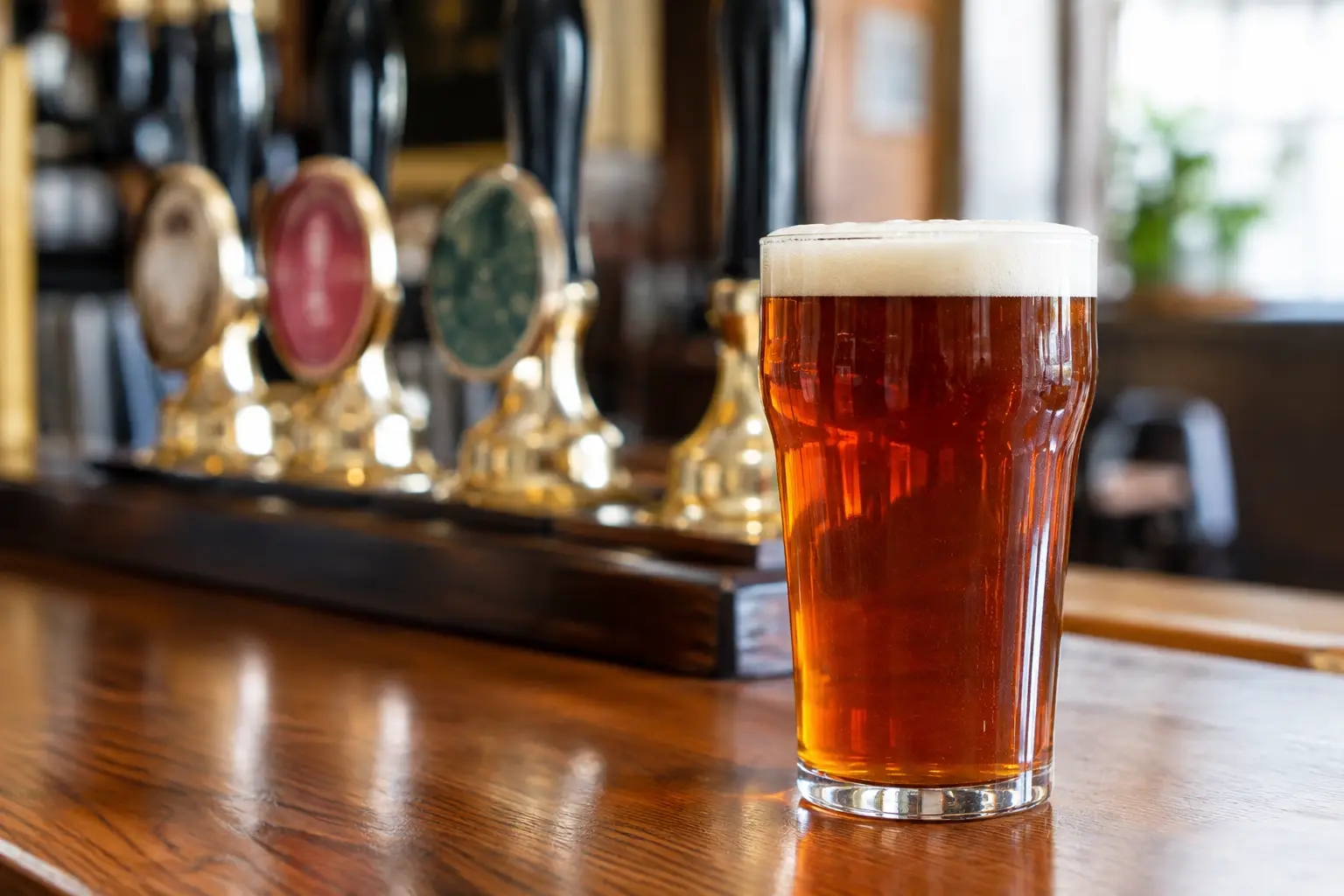
Real ale rewards patience: learn how cask beer is brewed, kept and served, plus how to choose a fresh pint for a proper pub visit across Epping today.
A good pint of real ale is not simply pulled from a tap and forgotten about. It is a living beer, still developing in the cask until the moment it reaches your glass. That is why a well-kept real ale can be one of the most satisfying things to order at the pub: fresh, characterful and shaped by the care behind the bar.
For some, it is the familiar pint after a country walk. For others, it is a chance to try something new alongside lunch, Sunday roast or an evening meal. Either way, real ale brings a little more craft and occasion to a visit.
What is real ale?
Real ale is beer that continues to ferment naturally in the cask from which it is served. Unlike most keg beers, it is not artificially carbonated at the point of dispense. Its gentle condition comes from the beer itself, creating a softer, more natural texture and a flavour that is often fuller and more nuanced.
You may hear it called cask-conditioned beer, cask ale or simply a proper pint. These terms are closely connected, although the key feature is secondary fermentation in the vessel from which the beer is served.
The result is not meant to be fizzy in the way a lager or some keg beers can be. A good cask ale has a light, creamy head, a lively but restrained sparkle and a finish that lets the malt, hops and yeast do the talking. It can be golden and zesty, dark and roasted, rich with toffee notes or crisp enough for a warm afternoon in the beer garden.
Why real ale tastes different
Every stage matters, from the brewer's recipe to the way the cask is looked after in the cellar. Real ale is more sensitive than beer served from a sealed keg, which is part of its appeal and the reason it needs genuine attention.
It is served at cellar temperature
Real ale is usually served cooler than room temperature, but warmer than lager. This often surprises people trying it for the first time. The slightly warmer serving temperature allows more aroma and flavour to come through, particularly in maltier bitters, porters and stouts.
A pale ale with citrus or floral hops may seem brighter at cellar temperature, while a traditional bitter can reveal biscuit, caramel and gentle earthy notes. Serving it ice-cold would hide much of that character.
The cask evolves as it is served
Once a cask is tapped, it has a limited window in which it is at its best. A busy pub with well-managed turnover is therefore a reassuring place to order it. The beer should be clear where appropriate, fresh on the nose and balanced on the palate, without tasting flat, stale or overly sharp.
This is also why the same beer can taste subtly different from one pub to another. The recipe may be identical, but the journey, cellar conditions and care in serving all have an effect. That variation is not a flaw when the beer is kept properly. It is part of what makes each pint feel special.
It rewards balance rather than excess
Many real ales sit at an easy-going strength, often making them well suited to a relaxed lunch or a longer catch-up with friends. There are stronger examples too, especially seasonal beers and old ales, but cask beer has long been about drinkability as much as intensity.
That does not mean it lacks flavour. A modest-strength bitter can have more complexity than a stronger beer if its malt, hops and yeast are in harmony. The pleasure is in the balance.
How to choose a real ale you will enjoy
There is no need to know every brewery or style before ordering. Start with the flavours you generally enjoy and ask what is pouring well that day. Pub teams who care about their ale will be happy to describe the options in plain English.
If you usually choose lager, try a pale golden ale first. These are often light in body with fresh citrus, berry or floral hop character. They can be refreshing without being overly bitter and are an easy introduction to cask beer.
If you enjoy amber beers, a classic best bitter is a dependable choice. Expect rounded malt, light fruit, toast and a clean bitterness. It is the style many people picture when they think of a traditional English pub pint, and for good reason.
For something richer, look towards a dark mild, porter or stout. These can bring notes of coffee, cocoa, treacle or toasted bread, but darker colour does not automatically mean a heavy beer. Some are surprisingly light and smooth, making them excellent with food.
A half pint is always a sensible way to try something unfamiliar. It is not a lesser choice. It is simply the right measure when you want to explore a new style, pair beer with a meal or keep the afternoon at an easy pace.
Freshness is the mark of a good pint
A real ale should look and smell inviting before you take the first sip. Some beers are naturally clear, while others may be hazy by design, so clarity alone is not the whole story. More useful signs are a clean aroma, a sensible head and a taste that feels bright rather than tired.
A slight natural variation is normal. What you do not want is a vinegary smell, an obvious damp-cardboard flavour or a pint that seems completely lifeless. Good cellar practice prevents these issues: clean lines, correctly stored casks, the right temperature and careful pouring all play their part.
Turnover matters too. A pub that serves real ale regularly is better placed to keep each cask moving and present it at its best. That is why ordering a local or seasonal ale at a well-loved country pub can be such a pleasure. You are tasting a beer with a sense of place, served in the setting it was made for.
Real ale with pub food
Wine is not the only drink worth considering with a proper meal. Real ale can be a remarkably good match for classic pub dishes, especially when you choose a style that complements rather than overwhelms the plate.
A pale ale works beautifully with fish, chicken and salads, where its brightness can lift lighter flavours. A balanced bitter is a natural companion for burgers, sausages or a traditional pie, matching savoury richness without competing with it. Porter and stout pair well with slow-cooked beef, game and rich desserts, particularly those with chocolate or caramel notes.
It depends on the recipe and your own palate, of course. A heavily hopped pale ale may clash with a delicate sauce, while a strong dark beer can be too much for a light lunch. The best approach is simple: ask about the beer, consider the food and choose what sounds enjoyable.
At The Merry Fiddlers, a real ale can sit just as comfortably beside a relaxed bar snack as it can alongside a considered meal. It is part of the traditional pub experience, but there is nothing old-fashioned about enjoying a good beer with good food and good company.
Cask ale is not only for experts
There is sometimes an assumption that real ale belongs only to seasoned drinkers who know every regional brewery and can identify hop varieties at a glance. In reality, it is one of the most welcoming categories of beer.
You do not need a tasting vocabulary. You only need to know whether you fancy something light, hoppy, malty, dark or easy-drinking. The rest can be a pleasant surprise. Seasonal casks also make repeat visits more interesting, as there is often something different to try when the weather changes or a local brewer releases a limited beer.
Real ale is also a sociable choice. It invites conversation, whether you are comparing pints around the table, remembering an old favourite or asking for a recommendation at the bar. In a busy dining room, by a fire in colder months or outside when the garden is full, it has a way of making a simple drink feel properly considered.
Next time you are choosing a pint, ask what is fresh on cask and take a moment to enjoy it at the pace it deserves. A well-kept real ale is one of the small pleasures that makes a good pub visit linger in the memory.